The Meta-Series
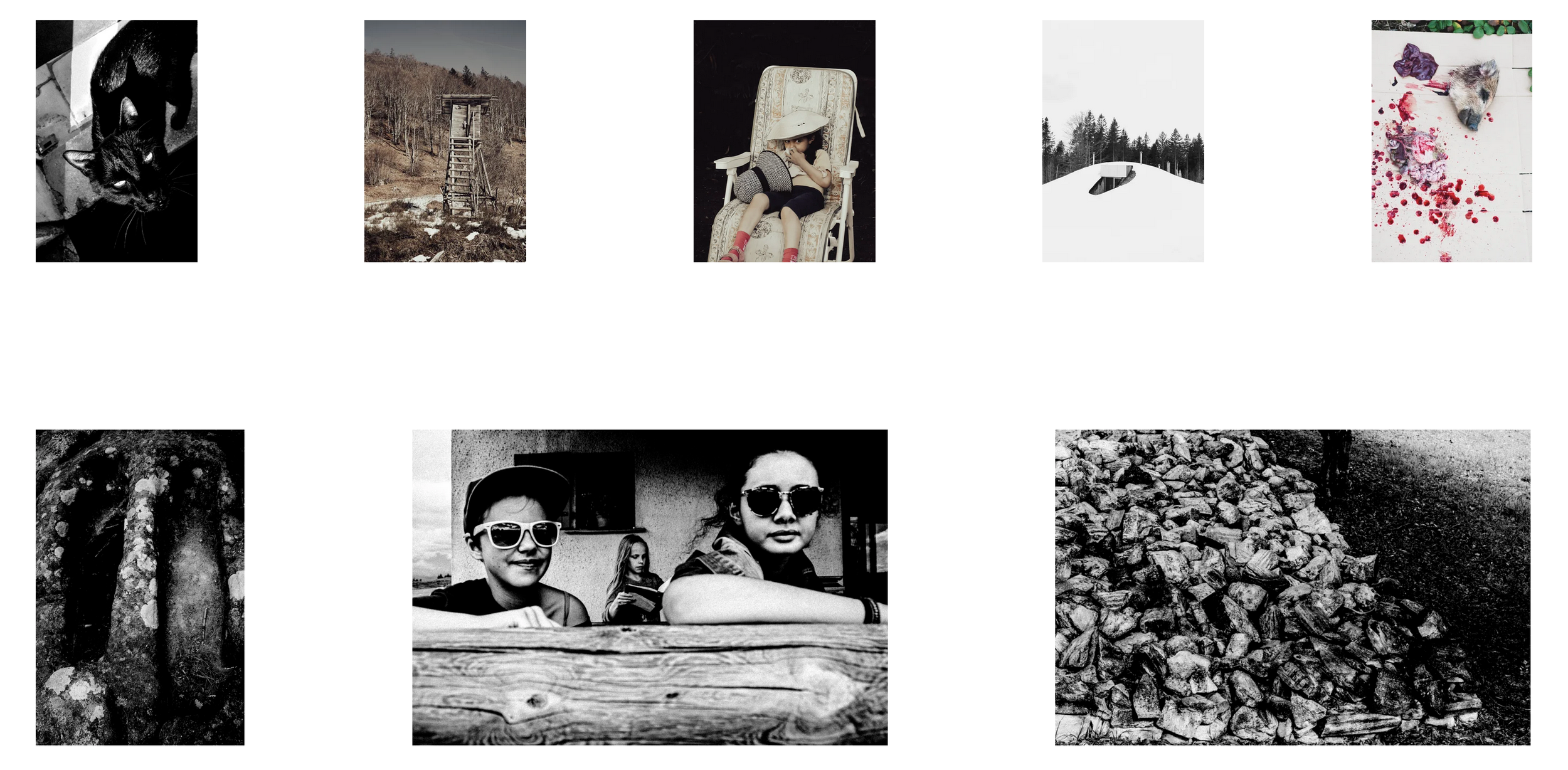
In recent months, as I returned to my archives and revisited certain series I once considered finished, an obvious realization emerged: my work does not lend itself to closed, self-contained entities. For many years, it has been built through series, each with its own autonomy, rhythm, and visual language. Over time, however, these series began to enter into dialogue, to echo one another, and sometimes to shift position. Together, they now form a larger whole, a field of resonances that I have chosen to call a meta-series.
The meta-series is not an additional series. It has no clearly identifiable beginning, nor a predetermined end. It functions as an underlying structure, a conceptual framework within which projects take shape, transform, and are continually re-evaluated. Certain images change status over time; what I once thought complete reopens, what I considered peripheral becomes central.
Within this logic, it is possible for a single photograph to belong to two different series. Far from being an anomaly, this displacement is fundamental to the meta-series. Such images act as links, bridges, or zones of passage between distinct bodies of work. They create visible or subterranean connections and invite a transversal reading of the work as a whole. An image is no longer assigned to a single narrative; it circulates, acquiring new meanings depending on the context in which it appears.
This approach reflects my way of inhabiting the world—within an unstable and fragmented time, shaped by political, ecological, and existential tensions. Whether in Metamorphosis, Todtnauberg, Unheimlichkeit, Eschaton, or more intimate series, each project interrogates, in its own way, a shared condition: a world in transformation, often on borrowed time.

The meta-series allows these projects to be articulated without confining them to a single narrative. It accepts deviations, overlaps, and returns. It embraces incompleteness and the porosity of forms. To work in this way is to engage with the long term, to accept that one’s gaze evolves, that images age, and that their symbolic charge shifts with context.
This journal accompanies that process. It is its reflective space: a place where the series can be approached differently, where their links, movements, and points of friction become visible. This text is not intended to offer a definitive definition of the meta-series, but rather to articulate a provisional understanding of it, at a given moment in the work—an attempt to name what, today, runs through all of my images.