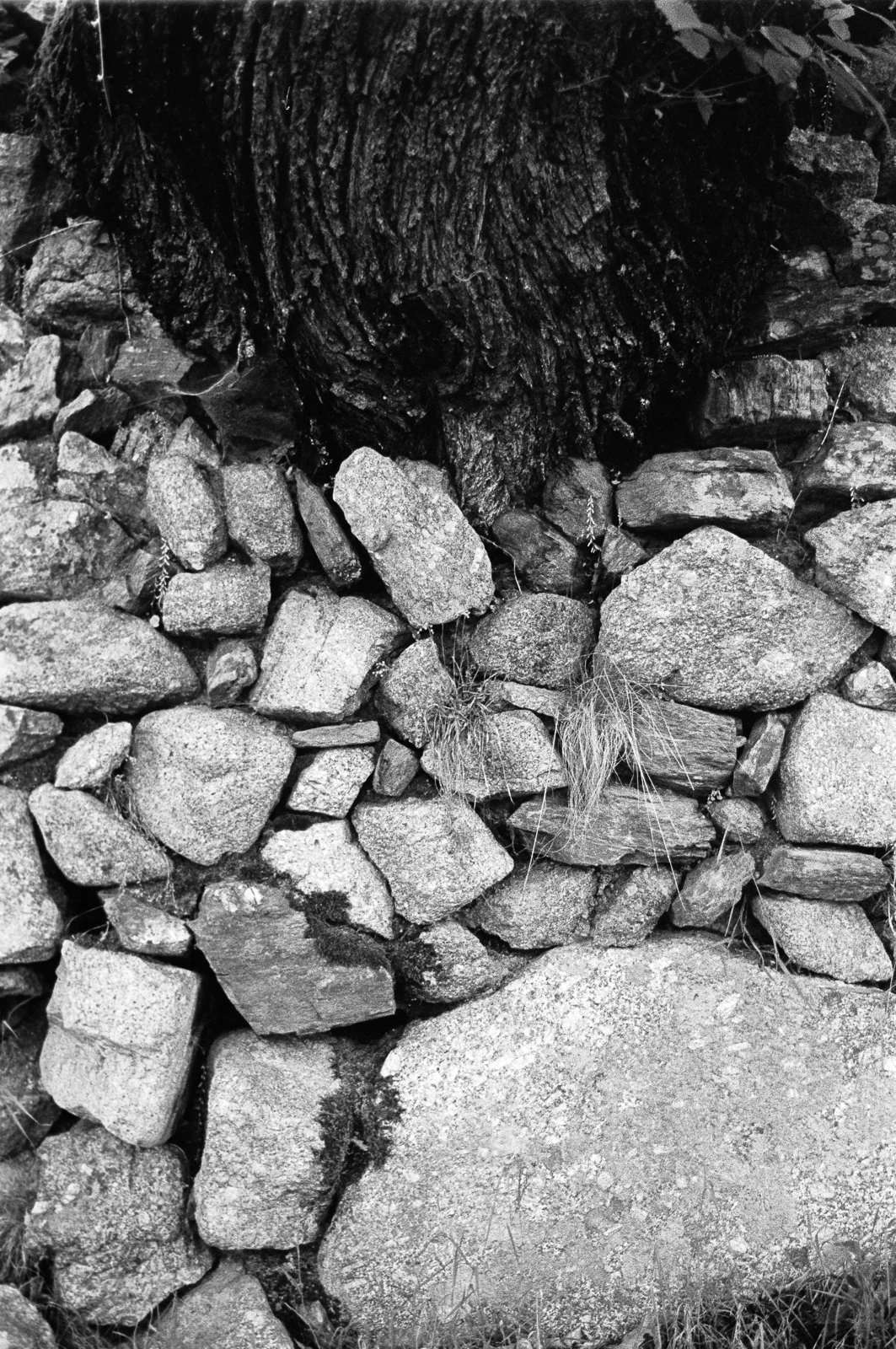
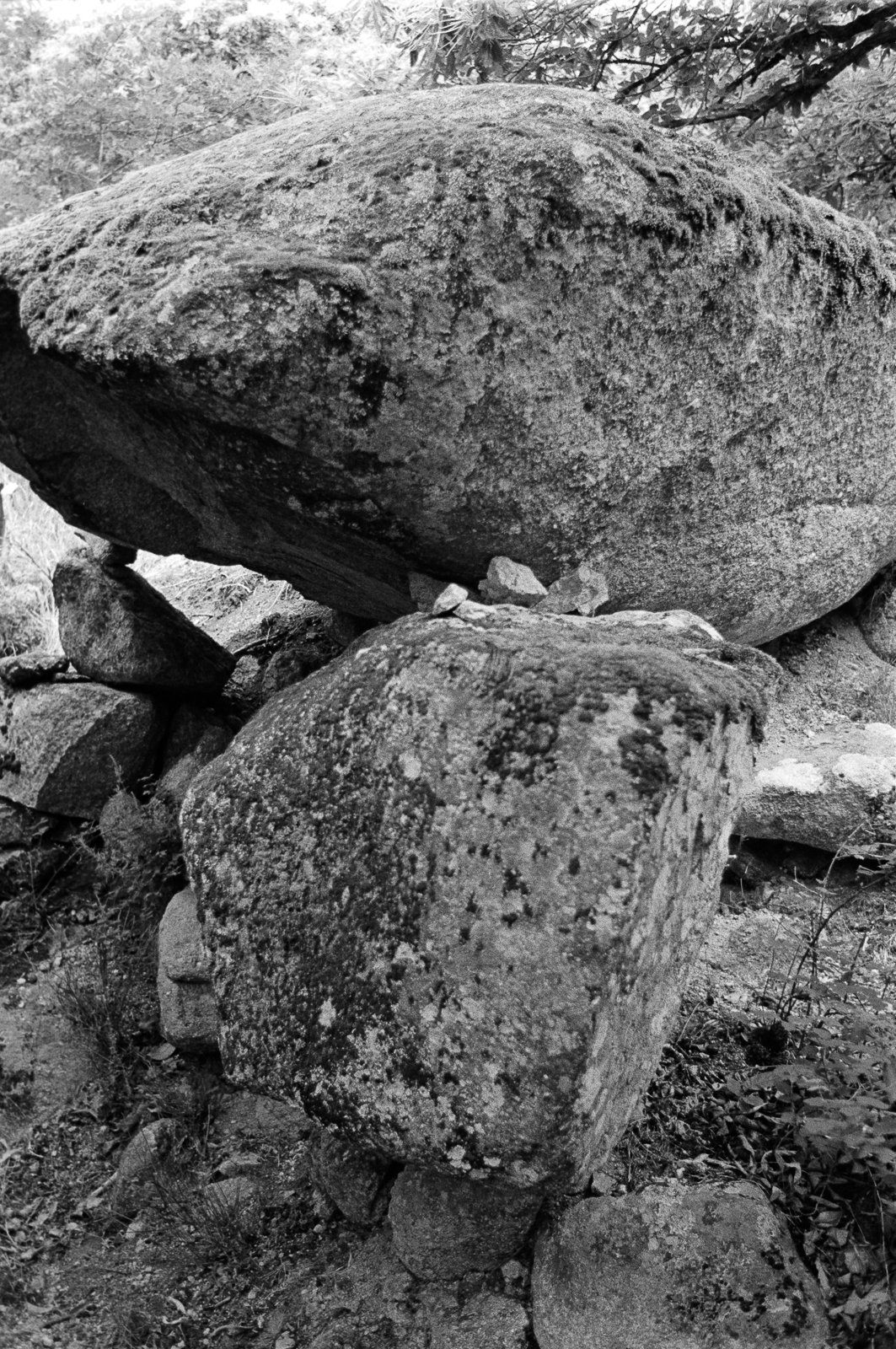
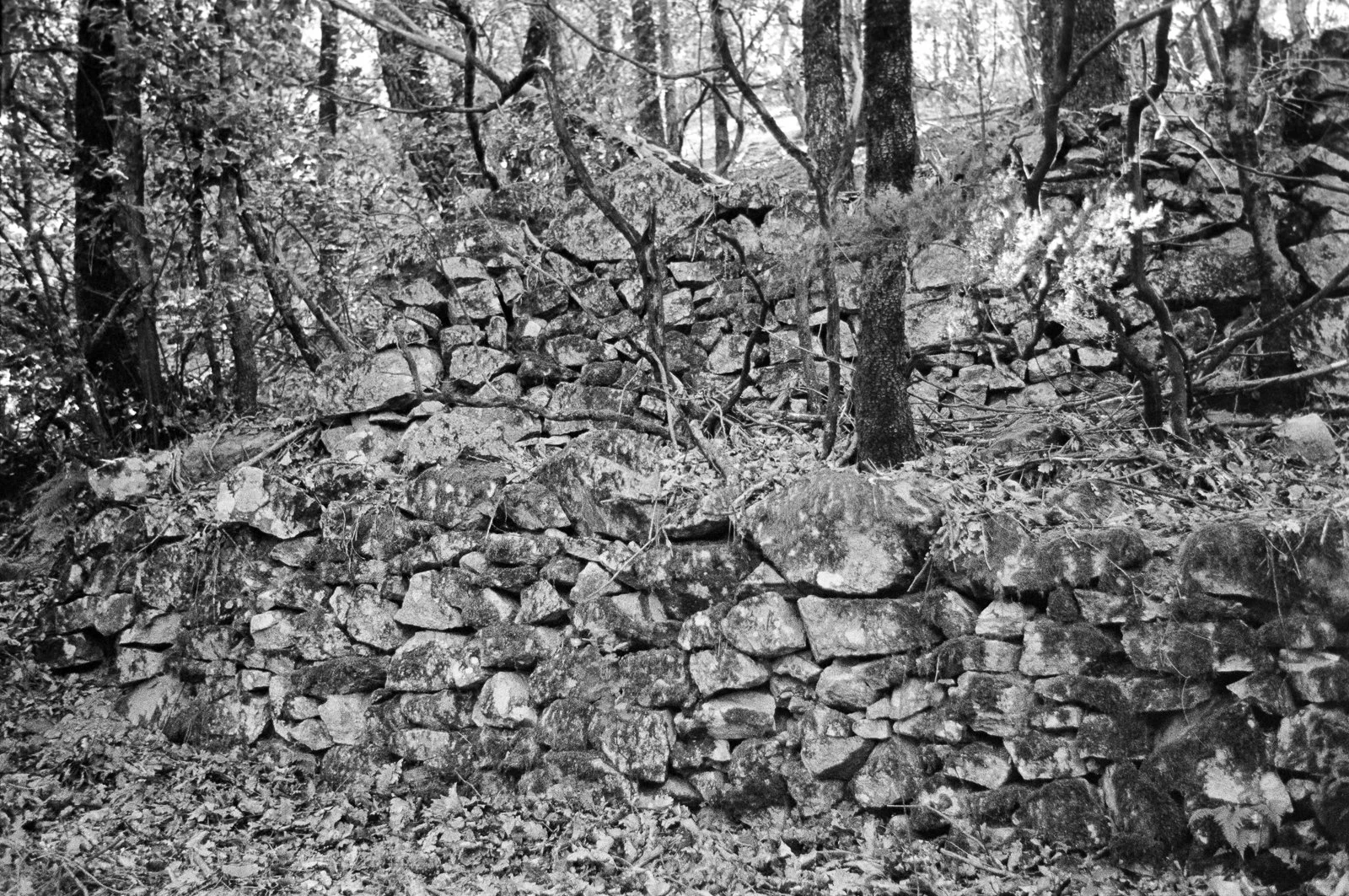
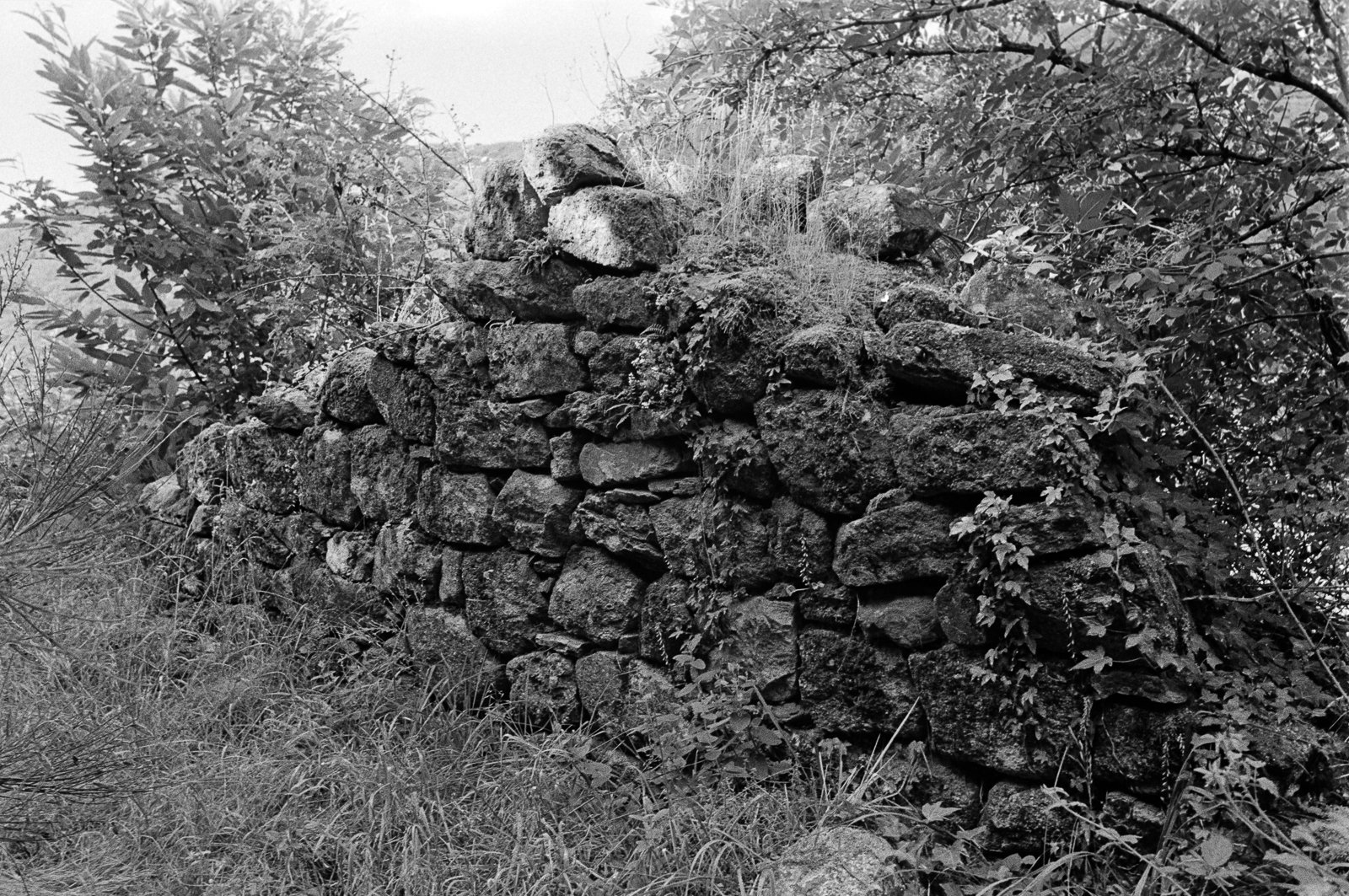
Faïsses
Inventory of an Erasure — Ardèche, 2026–2029
Work in progress
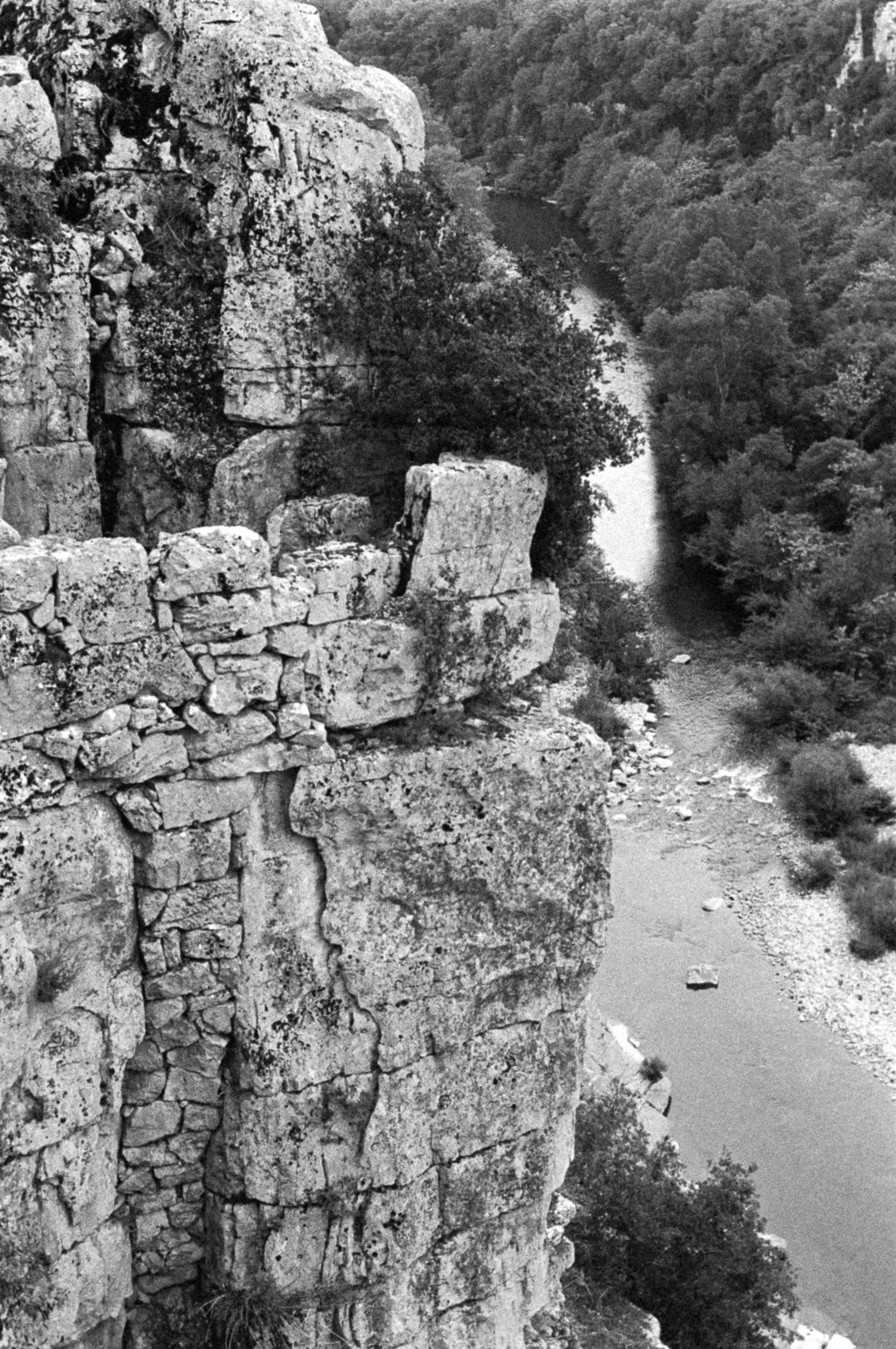
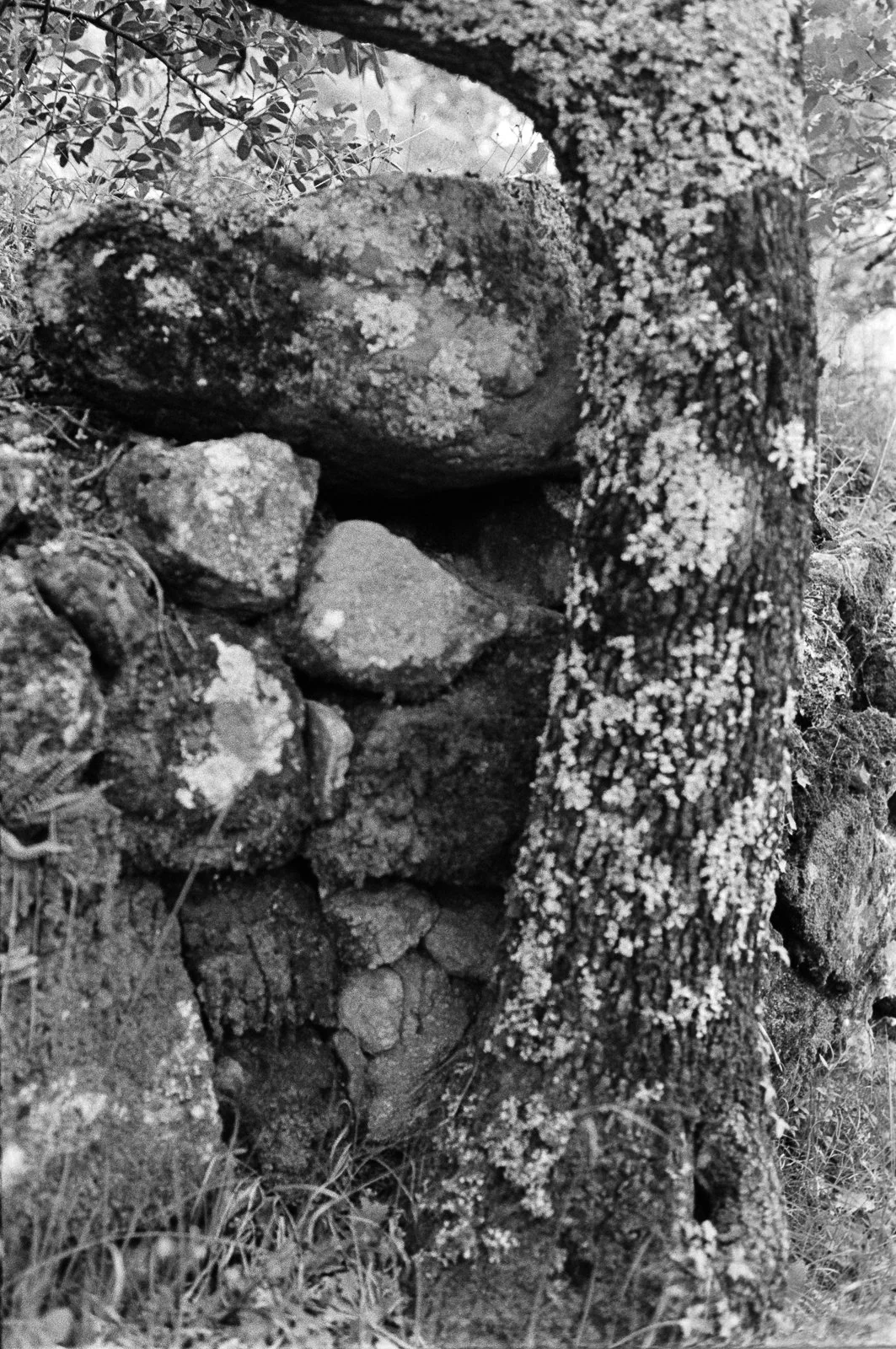
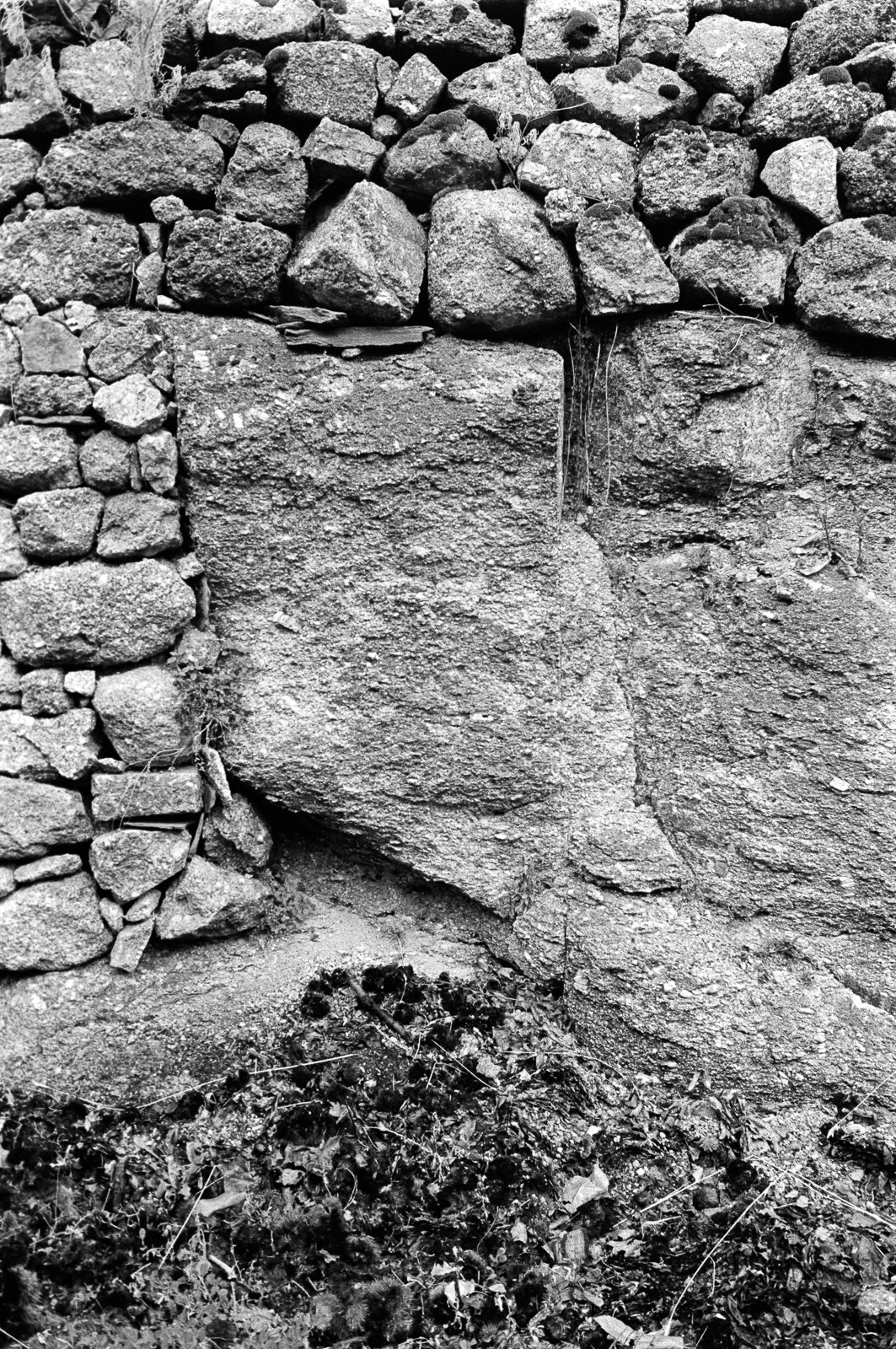
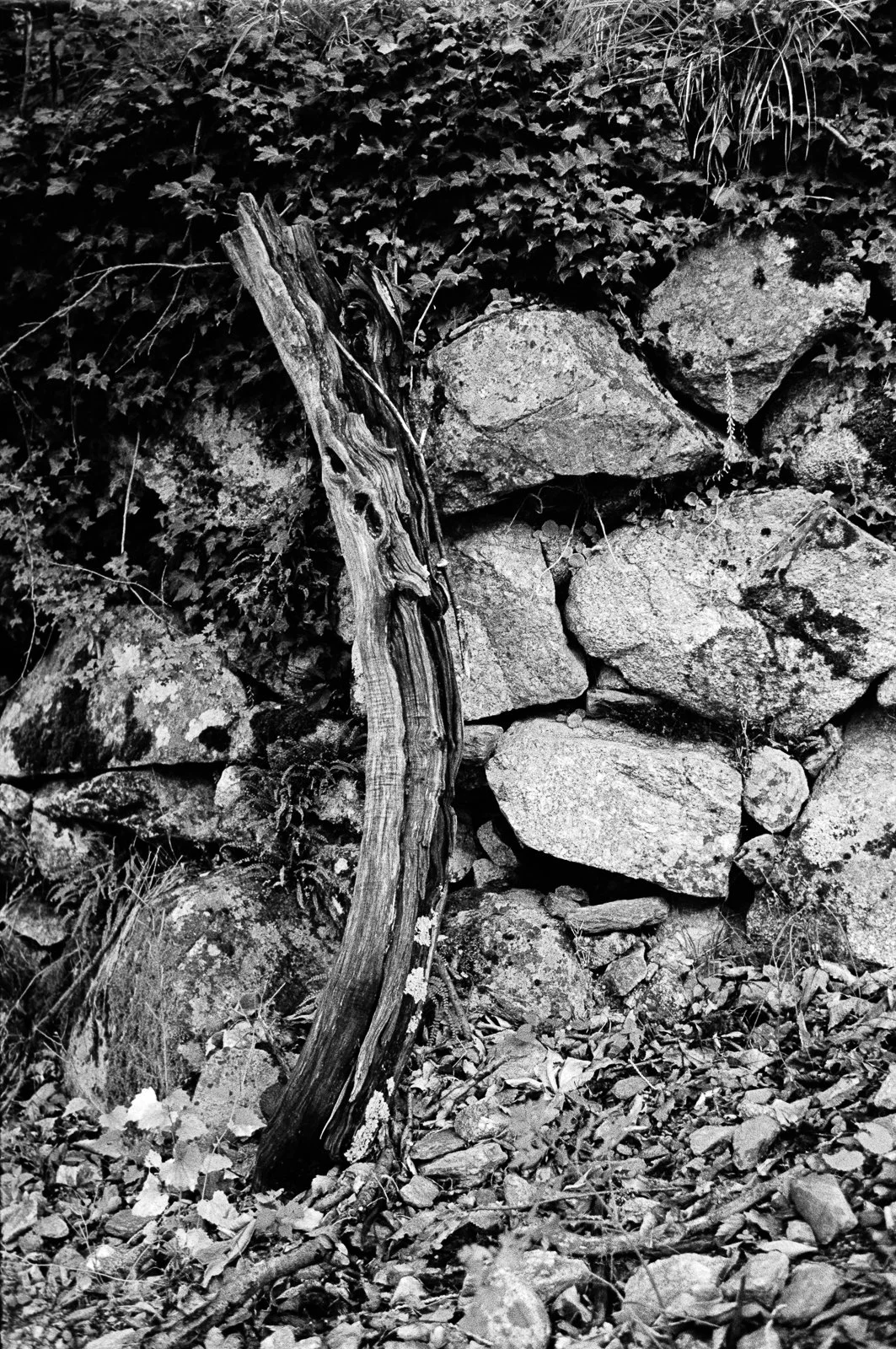
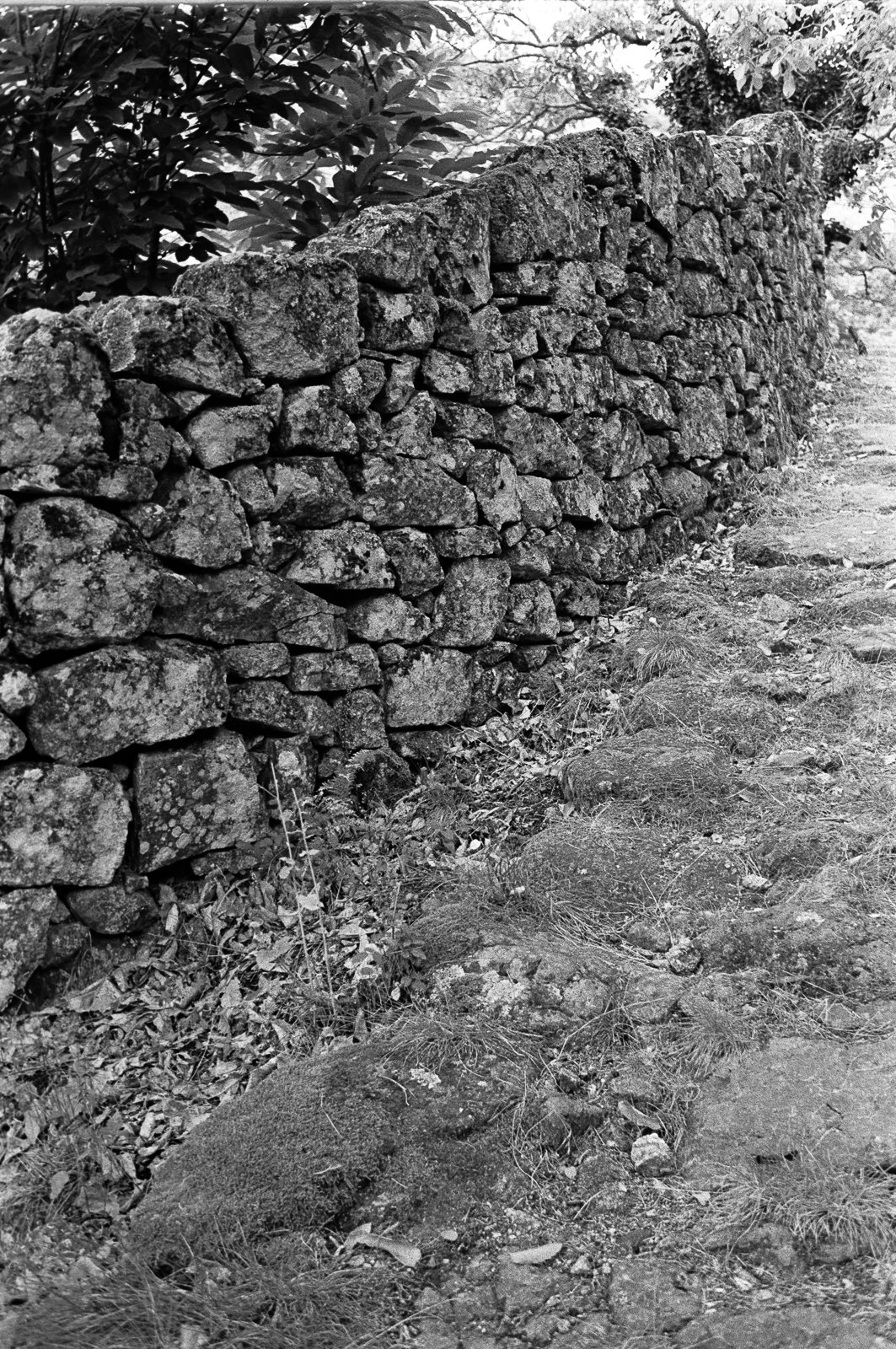
On the slopes of the Ardèche, four centuries of peasant labour inscribed tens of thousands of kilometres of dry-stone walls into the rock. The faïsses — terraced banks raised without mortar — are the territory's largest anonymous, collective work. Since rural depopulation they have been quietly vanishing: bramble reclaims the bank, the wall collapses, the slope becomes slope again.
This body of work is their photographic inventory, taken at the moment of disappearance. Black-and-white film, exclusively. No figure, no contemporary sign, no picturesque. Three scales — the wall fragment, the bank, the hillside — recorded the way one records a trace.
No figure, no contemporary sign, no picturesque, no dramatic sky. A typological suite held in documentary dryness, refusing the sublime. The subject is not the landscape. It is what remains of a gesture once its function has died.
Faïsses belongs to the typological lineage opened by Bernd and Hilla Becher: a methodical, serial survey of forms their function has abandoned. Where the Bechers inventoried industrial architecture, this work records the dry-stone terraces of the Ardèche at the moment of their erasure — the territory's largest anonymous, collective work, now returning to scrub.
The project sets itself apart from three neighbouring approaches. It is not a photographic landscape observatory built on diachronic re-photography: it does not measure time, it records a disappearance. It refuses the aerial aesthetic that turns terraces into spectacular abstractions — the sublime is barred. And while it shares with a certain Mediterranean art photography its black-and-white film and its southern subject, it reverses the gesture: against poetic fluidity and the refusal to caption, it sets documentary dryness and cadastral discipline. Every frame is geolocated. The faïsses are a common good; so is their inventory.