Borrowed Time, notes on Eschaton
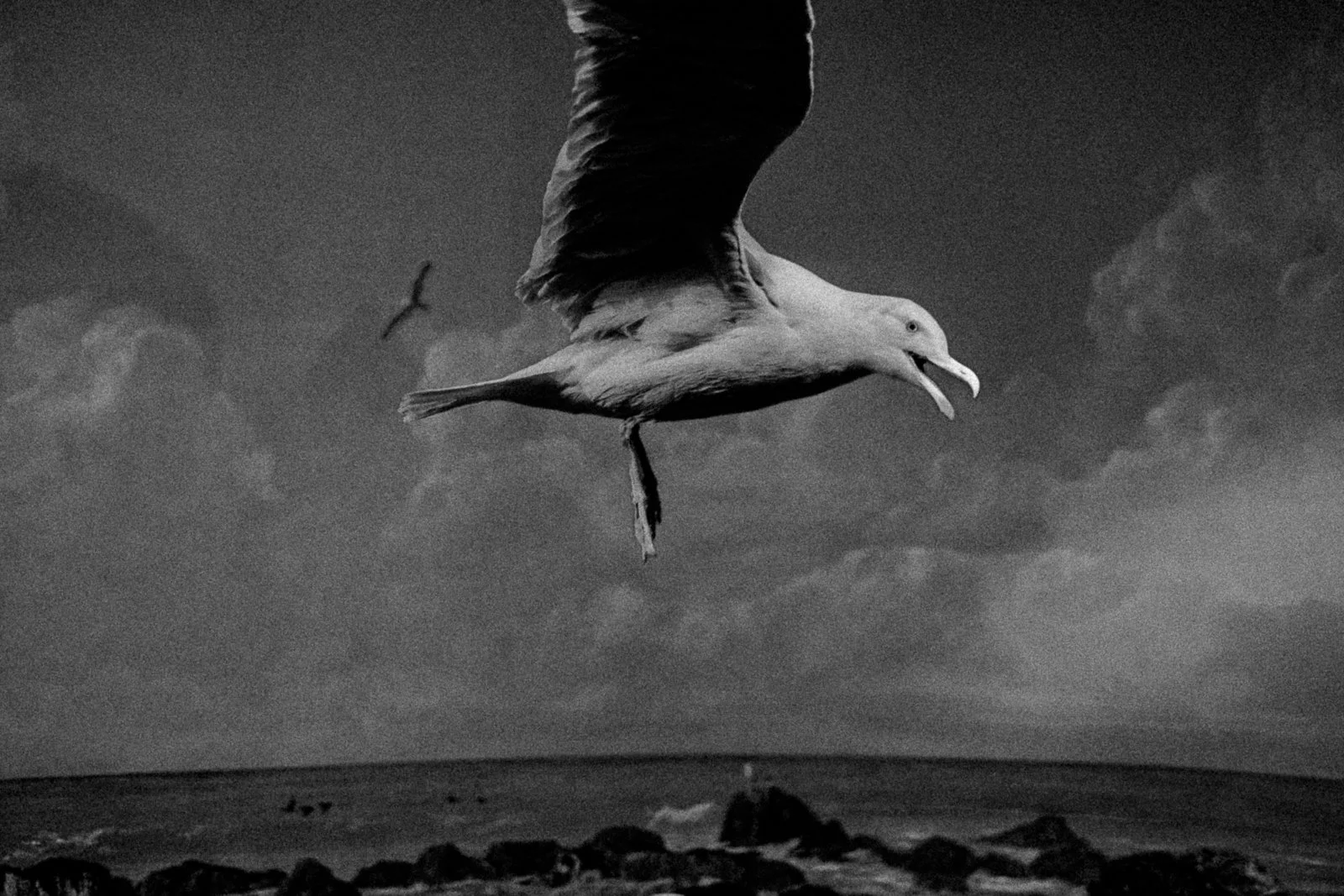
Borrowed Time or notes on Eschaton …
"Our inheritance was left to us by no testament." — René Char
I did not plan this series. It accumulated — twenty years of images, several continents, no narrative thread — until the sequence tightened and the photographs began to speak to one another differently. No longer as documents of crisis. As pressure.
We have inherited a world that no one meant to leave us in this condition. A world that knows what it is capable of, and goes on regardless. Günther Anders gave it a name as early as 1956: since Hiroshima, we have been living on borrowed time. Not peace — peace would be a resolution. Borrowed time is something else: the indefinite interval between two catastrophes, inhabited by beings who feign ignorance of what they know. Anders saw in it the constitutive failure of the modern imagination: our capacity for destruction has definitively outrun our capacity to represent it. We can annihilate. We cannot conceive of annihilation. So we live between the two — and we go on stacking firewood, posing for family photographs, drinking coffee in the morning.
It is not only war. It is the wider abyss beneath our civilizations — that subterranean movement by which entire societies advance toward their own erasure without being able to stop, or even, truly, to look. Heidegger saw in being-toward-death not a curse but the condition of an authentic existence: knowing that it ends is what gives the present its density, its weight. But what happens when it is an entire civilization that is being-toward-death, and refuses to know it? When collective lucidity is precisely what it resists?
These photographs have no answer. They have fragments. Sheep heads lined up on a market stall in Athens. A sky split by lightning above the trees. Bodies plunging into dark water. No story binds them — only the recurrence of certain motifs, the way the same foreboding moves through different places and different times. War as symptom. Collapse as horizon. And everywhere, ordinary life pressing on: stubborn, fragile, strangely beautiful.
René Char wrote from inside the catastrophe. In Feuillets d'Hypnos, lucidity does not cancel action — it demands it differently: in the precision of the gesture, in the exactness of the gaze turned toward what still holds. It is in that spirit that I built this work. Not to denounce. Not to bear witness in any journalistic sense. To look clearly — at the abyss within the everyday, the beauty within ruin, the persistence of threats we believed were behind us. For borrowed time is never salvation. It is a narrow clearing between two perils.
Eschaton is a constellation, not a catalogue. I conceive it as a metaseries: not a set of isolated images but a body that connects several of my projects like stars in a single sky. Each photograph keeps its singularity while resonating with the others, revealing motifs and questions that run beneath the whole of the work. Each image stands alone. Together, they map an era that knows itself to be living on borrowed time — and goes on existing, nonetheless.
Each image is a fragment: trace, fracture, specter. No explanations. Only the urgency of looking.