Texts
Critical writing on the work, and reflections by the artist. On seeing, on making images, on what persists.
Editing
Photographing is accumulating. But a series does not exist in volume — it exists in decision. I have spent years photographing memory, absence, and the fractures of the present. What I have learned is this: the work does not happen in front of the subject. It happens afterwards, alone, in the repeated confrontation with one's own images.
Photographing is accumulating. But a series does not exist in volume — it exists in decision. I have spent years photographing memory, absence, and the fractures of the present. What I have learned is this: the work does not happen in front of the subject. It happens afterwards, alone, in the repeated confrontation with one's own images.
The Edit as an Act of Thought
In my practice, editing is not simply one step among others. It is where the work truly begins — or rather, where it reveals itself for what it really is.
Photographing is accumulating — hours, years, thousands of possibilities. But a series does not exist in volume. It exists in decision. Every image kept is an affirmation; every image discarded, a refusal. This double movement — keeping, rejecting — is what gives a body of work its necessity, its interior tension, its reason for being.
Time as a Condition of Editing
My series are built over the long term. Todtnauberg, Unheimlichkeit, Resonances — none of them emerged from a single session or a single moment of clarity. They revealed themselves through repeated returns to the images, through gradual connections, through removals that opened new coherences. Editing is a form of deferred looking — a dialogue with oneself across time, where the person looking is no longer quite the person who photographed.
This temporal distance is a condition, not a luxury. It allows one to see without the intoxication of the moment, without the fatigue of the session, without the attachment to the circumstances surrounding the act of taking the picture. What seemed strong can turn out to be anecdotal; what had been overlooked can suddenly become central. The image detaches itself from its context of production and reveals itself for what it truly is.
Larraín: The Series as a Living Organism
Sergio Larraín is perhaps the most radical example of this relationship between editing and time. He spent decades reworking his archives — not to exploit them commercially, but because his understanding of what he had photographed continued to evolve. His images of Valparaíso — taken in the 1950s and 1960s — went through very different states of editing at different periods of his life. What he showed at 30 was no longer what he showed at 60. Not because the images had changed, but because he had changed, and his relationship to memory, to childhood, to the city had been transformed.
Larraín spoke of photography as a form of meditation, an almost spiritual practice. Editing participated in the same logic: it was not about selecting the "best" images in any technical sense, but about finding those that resonated with something essential, intimate, sometimes inexplicable. He accepted this irrational dimension in the act of selection, and it is precisely this that gives his work its particular depth — that feeling that every chosen image is there for reasons words alone cannot exhaust.
Moriyama: Editing as Resistance to the Flow
Daido Moriyama occupies a paradoxical position in the history of photography: he is one of the most prolific photographers who has ever worked — tens of thousands of images produced over more than sixty years — and yet his published body of work possesses a striking formal coherence. This paradox is only possible through an editing practice of extreme rigour, all the more remarkable for being almost invisible.
His method is one of deliberate saturation. He photographs continuously, compulsively, as though interrupting the flow risks missing something essential. But it is precisely because the flow is inexhaustible that editing becomes a vital necessity — not to control production, but to give it meaning retrospectively. Moriyama returns constantly to his archives, re-edits them, republishes them in new forms, recomposes books from older material placed in new contexts. The same image can appear in several books carrying radically different meanings depending on what surrounds it.
What his practice reveals is that editing is not a definitive gesture but a repeated one — an endless conversation with one's own archives. There is no "final" version of a body of work; there are successive states, each revealing something the previous state could not see. This conception of editing as an open, never fully closed process resonates deeply with my own experience of working in long series: a series is never truly finished, only momentarily stopped.
Frank: Editing as Subversion
Robert Frank offers a different example still — perhaps the most subversive. When he edited The Americans, he deliberately set aside the "well-made" images in favour of blurred, poorly framed, backlit photographs — images that any art director of the time would have rejected outright. His editing was an act of rupture with the dominant codes of documentary photography in the 1950s. He was not searching for representational clarity but for something more restless, closer to subjective perception, to raw affect.
What is remarkable about Frank is that this editing reflected a worldview, not merely a style. The unease, the alienation, the loneliness he wanted to show in postwar America — these things could not be shown through smooth, well-exposed images. The form of the editing matched the form of the argument. The selection was already an interpretation.
What Editing Reveals About Oneself
What these examples share — beyond their considerable differences — is that editing always ends up revealing something the act of photographing alone could not yet know. Editing is the moment when one becomes aware of what one was truly searching for, even if that was not apparent at the shutter's release.
In my own work, it is often in the editing that I understand the real subject of a series. I thought I was photographing a place; I discover I was photographing an absence. I thought I was working on collective memory; I realise it was a deeply personal memory structuring my choices all along. Editing is a mirror — uncomfortable, often, but necessary.
What I look for in a final selection is not the perfection of each isolated image, but the rightness of what they form together. The order, the silences between images, the breaks in rhythm — all of this produces a meaning that the act of photographing alone cannot anticipate. An image can be stronger in a certain position within the sequence than a technically superior image placed elsewhere. The context that images create for one another is part of their meaning.
Editing as Responsibility
There is finally an ethical dimension to this selection, particularly acute when working with memory and the fractures of the present. To keep an image is to decide it must be seen. This decision is never neutral. It engages a responsibility towards the photographed subjects, towards the historical and social context from which the images arise, towards the viewer who will trust them to grant access to something true.
Setting an image aside can be an act of restraint as much as of formal rigour. Some images are too legible, too explicit — they close down meaning rather than opening it. Others are too fragile, too intimate to withstand the public gaze without betraying themselves. Editing is also the art of knowing what must not be shown.
Editing is, at its core, the place where I answer the question I should have asked before pressing the shutter: why this image, and to say what? But it is precisely because one cannot always answer that question at the moment of taking the photograph that editing is irreplaceable. It is what allows photography to move beyond the gesture of capture and become an act of thought.
You’re looking too quickly to really see.
I make photographs that don't give themselves up at a glance. Series that take ten years. Images that ask you to stop — genuinely. In a world that accelerates, this has become a position. Here is why I hold it, and how to read what I do.
I make photographs that don't give themselves up at a glance. Series that take ten years. Images that ask you to stop — genuinely. In a world that accelerates, this has become a position. Here is why I hold it, and how to read what I do.
I was born in Germany. I have lived in Ardèche for many years. Between these two territories — one weighted with a history I did not live but nonetheless inherit, the other rural, peripheral, strangely shielded from certain pressures — a practice has formed that I could summarize as follows: I photograph what time leaves behind. Not events — their residue. Not things — their echo.
This is not a slogan. It is a working constraint, almost a negative discipline. It forbids me the spectacular image, the decisive moment, beauty that is too immediately available. It commits me to duration — to returning to the same places year after year, to the patient accumulation of images that, taken individually, often seem to amount to very little. But together, they exert a pressure. They produce something that resembles less a demonstration than a haunting. It is that haunting I am trying to build.
I do not look for the light that beautifies. I look for the light that reveals — the light that makes you feel the weight of what has settled there.
The tagline of my website, Not things. Their echo, is often read as a poetic formula. It is first of all an operational instruction. When I arrive at a place — a forest, a threshold, a battlefield, an empty room — my question is not: what is beautiful here? It is: what remains? What, in this place, is not yet the past? What continues to act, silently, on the present?
Inheritance — Günther Anders and the Promethean Shame
The question of German inheritance runs through my work, sometimes subterranean, sometimes frontal. I did not live through the war. I carry no direct guilt. But I grew up inside a culture that long oscillated between two equally unsatisfying postures: silence and confession. Neither suits me. Photography offered me a third path.
The philosopher Günther Anders — born Günther Siegmund Stern, exiled, companion of Hannah Arendt, witness to Hiroshima — named Promethean shame the particular feeling that grips human beings in the face of their own creations: the shame of being inferior to the machines they have produced, of being incapable of fully sensing the reality of what they make and what they destroy. In The Obsolescence of Man, he diagnoses a humanity that can produce the apocalypse without being able to imagine it — that acts at a scale its own sensibility can no longer follow.
This is a thought that touches me directly. To be the heir of a generation that produced catastrophe without being able — or willing — to measure its weight: that is precisely the terrain I explore in the series Todtnauberg. The title comes from the Black Forest village where Heidegger had his hut — and where Paul Celan came in 1967, hoping for a word of recognition that never came. Celan wrote a poem. The absence of speech entered the mythology of European intellectual trauma.
My series departs from there and extends: toward Amsterdam, toward the threshold of the Anne Frank House, toward Athens, toward Verdun. This is not a documentary project. It is an investigation into what these places still hold — into what, within them, continues to exert pressure on anyone willing to stop. My work does not seek catharsis. It seeks to hold this weight inside the frame. Without resolving it. Without dramatizing it either. Simply: leaving it present, opaque, irreducible.
A photograph does not show what happened. It shows what remained — and that is a different truth, harder, more durable.
Resonance — Hartmut Rosa against acceleration
My recent work has been built in dialogue with the thinking of sociologist Hartmut Rosa, and in particular his concept of resonance. Rosa describes late modernity as a condition of generalized acceleration: not only do things move faster, but the very relationship to the world is transformed. The world becomes more and more available — everything accessible, quantifiable, optimizable — and less and less resonant: things stop truly touching us, affecting us, changing us. We manage them. We no longer encounter them.
The series Resonances is built against this logic. It asks: what, today, still possesses the capacity to vibrate at a frequency we can feel? Which places, objects, presences resist total availability? The series also carries a political edge I do not avoid: we are living through a moment of authoritarian resurgence in Europe. My images carry that unease — not as a manifesto, but as a darkness gathering at the edges of the frame.
These images ask time of the viewer. Not effort, not specialized knowledge — simply the disposition to be touched. In a world defined by acceleration, that demand has become almost radical. It may be the most political thing I do: insisting, calmly and without apology, on another speed.
Territory — Ardèche, Europe, chosen margins
Ardèche is not a backdrop. It is an anchor — and a choice. Living far from the centers, far from Paris and Berlin, demands a form of autonomy I consider a working condition, not a handicap. Distance from the usual circuits of validation forces a kind of honesty: you cannot ask whether something will please before asking whether it is true.
This territory also shapes my eye in more concrete ways. The Ardèche landscape — its basalt, its ridgelines, its half-abandoned villages, its strongly marked seasons — has entered my work not as subject but as tonality. There is in this territory a resistance to the picturesque, a roughness, a way of being old without being nostalgic, that corresponds to something in my practice.
And then there is what is being built here collectively. Éditions du Tanargue, a publication rooted in this territory proceed from the same conviction: that serious photographic culture can be built far from the major fairs, that it does not need spectacle to exist, and that slowness is not a lack of means but an ethic.
Writing as parallel practice
I work in parallel on a theoretical writing practice developed in dialogue with the philosopher Claude Molzino. These texts are not commentaries on the photographs — they do not explain them or accompany them pedagogically. They are distinct investigations bearing on the same questions: how can an image carry time? What remains of a place after what defined it has disappeared? What is the status of the trace in a culture of the instantaneous?
They coexist with the photographs in a tension I do not try to resolve — discursive thought and thought through images do not say the same thing, even when they address the same object. That difference is precisely what interests me.
Manifesto for an Unfinished Photography
In recent months, as I returned to my archives and revisited certain series I once considered finished, an obvious realization emerged: my work does not lend itself to closed, self-contained entities.
I do not believe in closed photographic series.
I do not believe in images permanently assigned to a single narrative.
I do not believe in the illusion of completion.
A photograph is not a full stop.
It is a fragment under tension.
I constantly return to my series.
I reopen them, dismantle them, recompose them.
Some images disappear.
Others reappear elsewhere.
What once seemed stable begins to shift.
I call this movement the Penelope Effect:
to weave and to unweave, not out of doubt, but out of fidelity to reality.
Because reality itself never stands still.
An image does not carry a single meaning, but multiple potentials of meaning.
It does not exist on its own.
It exists through what surrounds it, what it contradicts, what it awakens.
That is why a single photograph can belong to several series.
Not out of opportunism, but out of necessity.
Placed within one body of work, it speaks in one way.
Placed elsewhere, it speaks differently.
The image does not change.
Its field of forces does.
From this practice emerged the notion of the meta-series.
A meta-series is not a theoretical overlay.
It is an open architecture, a network of correspondences in which series remain porous, traversable, and recontextualizable.
Each series offers a particular entry point into the same territory of questions:
power, memory, collapse, the persistence of ideological forms, the pervasive unease of the contemporary world.
Thus, Todtnauberg, Eschaton, Unheimlichkeit, Resonances are not autonomous or hermetic objects.
They are connected constellations.
Partial narratives of the same state of the world.
To refuse closure is to refuse simplification.
It is to accept that meaning is unstable, contradictory, evolving.
It is to work against photography as a finished product, and toward photography as a critical process.
In a world saturated with immediate narratives, locked messages, and consumable images, I claim incompletion as both an artistic and political position.
Photography should not reassure.
It must remain active.
Unsettled.
Available for new readings.
I do not produce series.
I construct a field of tensions.

This text stems from a question I am often asked: why do some of my photographs appear in more than one series?
Todtnauberg: Inherited Fault Lines
You might think Todtnauberg is just a photo series. An aesthetic proposition among others. That would be a mistake. Todtnauberg grows out of a deep unease: what History has left behind in our landscapes, our families, our habits of seeing.

come from there. Or not far from it. So: not innocent.
The forest Heidegger looked at — I breathed it.
Not by choice. By origin.
You might think Todtnauberg is just a photo series. An aesthetic proposition among others. That would be a mistake. Todtnauberg grows out of a deep unease: what History has left behind in our landscapes, our families, our habits of seeing. That heavy residue, often unspoken, which Europe prefers to bypass rather than confront — even though it always returns, under new names, new masks.
I was born a few kilometres from Todtnauberg. This place is no abstraction; it is my ground, the first horizon of my gaze. Returning there is not a walk. It is returning to an intimate territory where History has never stopped working on memory — mine, and that of so many others. A home — but a fractured one.

Everything begins with that cabin in the Black Forest. After the Shoah, Heidegger welcomes Paul Celan there. A philosopher who dodges confession. A surviving poet waiting for a word that will never come. A tiny yet decisive scene: one of the greatest thinkers of the twentieth century refuses to acknowledge his complicity. That is the original crack. The denial around which Europe continues to circle.
From that fracture, Todtnauberg unfolds. An open-air investigation into a European memory that, beneath its calm surface, remains a mined territory. The photographed landscapes — Verdun, Amsterdam, the Black Forest — are not places. They are archives. Evidence. Crime scenes whose wounds nature has covered but never healed.
One reading guided me throughout this inquiry: Les Origines by Reiner Schürmann. A testament-book, written under the urgency of approaching death. Schürmann dismantles the illusion of “native soil,” of clear lineage, of origin as reassurance. He shows that origin is a wound, not a myth. A fracture, not a foundation. Reading him, I understood that my own origin — Todtnauberg — belongs to that order: not a root, but a shard.
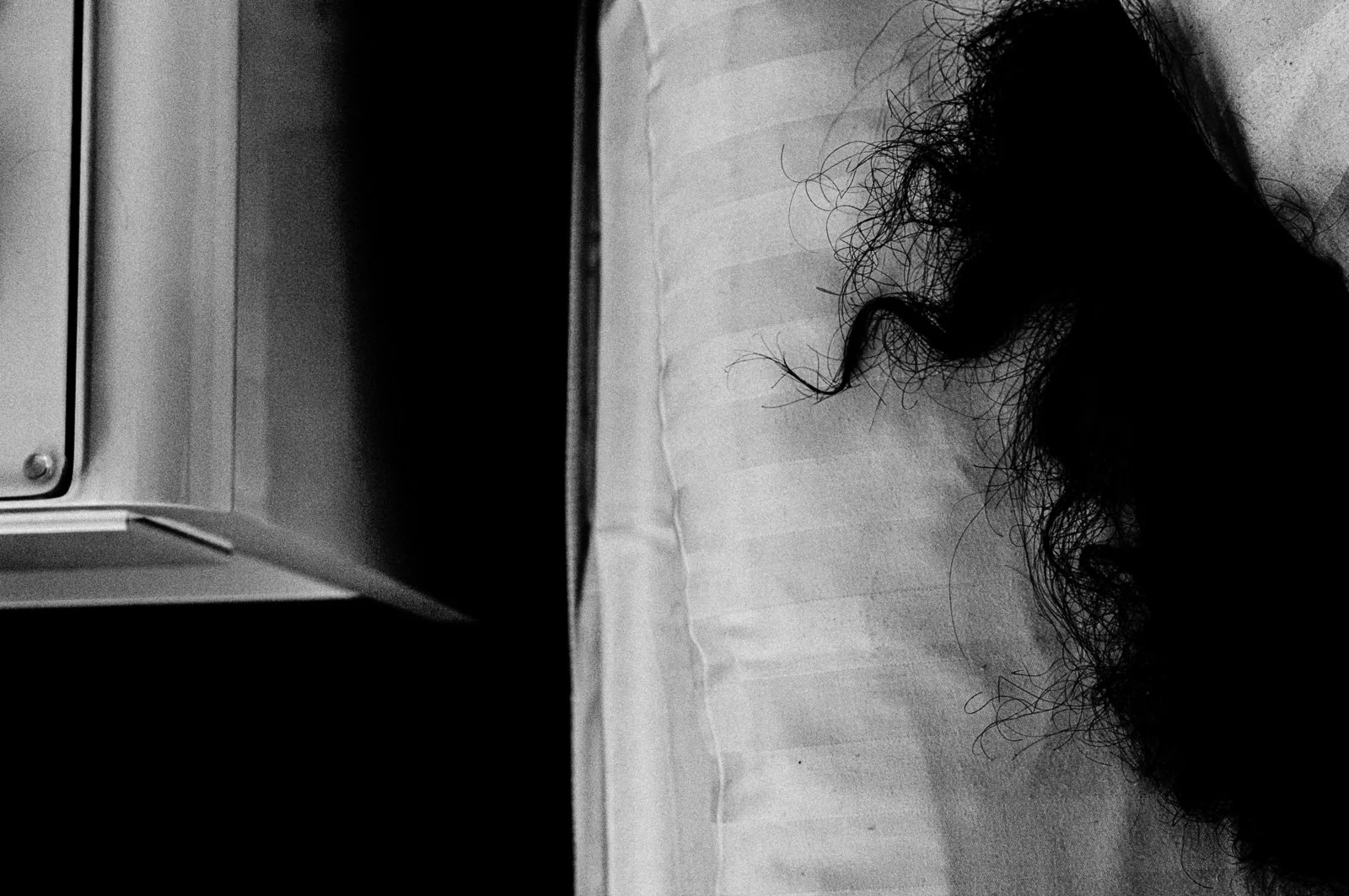
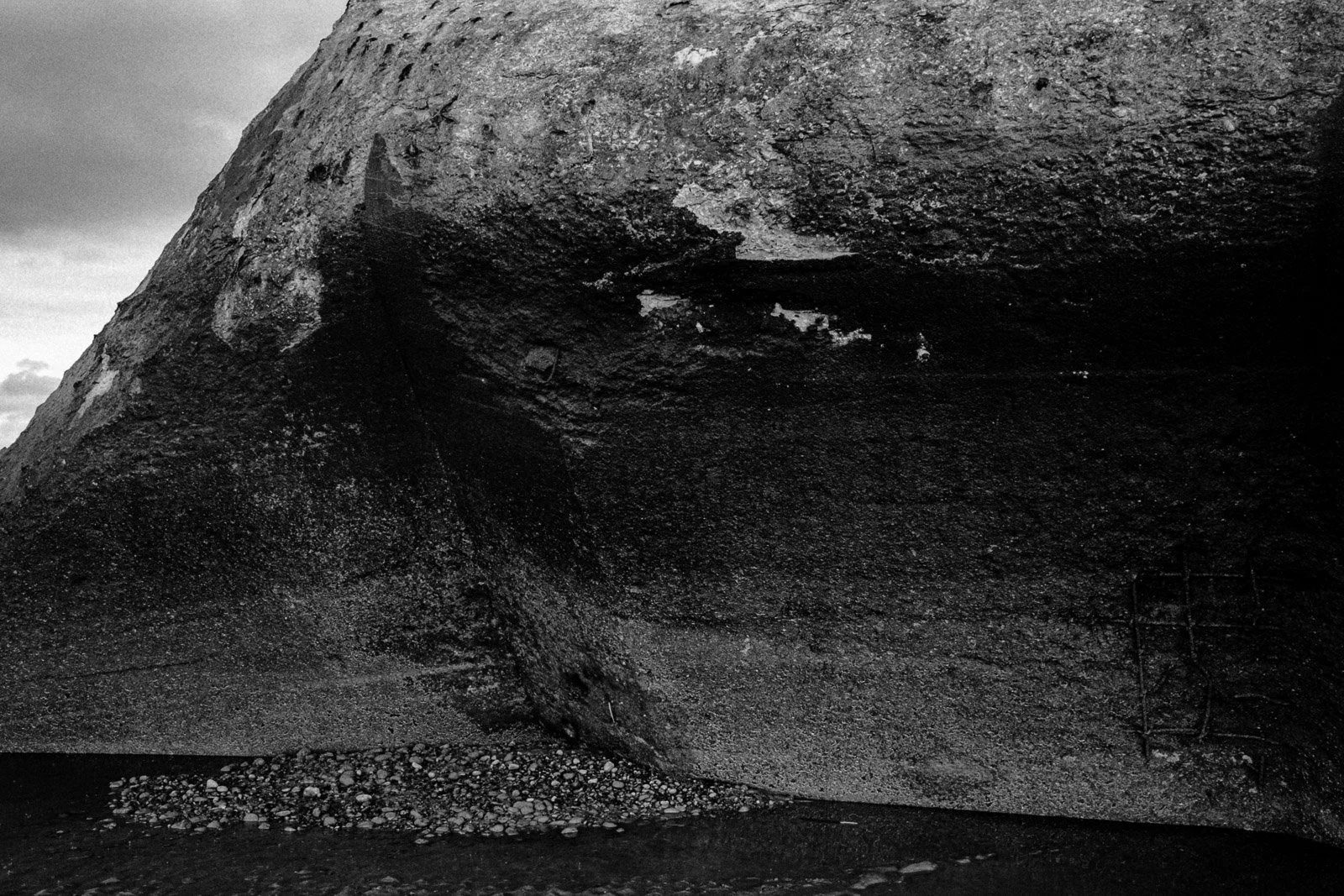
In the series, an almost abstract patch of ground photographed in Verdun speaks for itself: the industrialisation of death, millions of lives reduced to numbers and swallowed by mud. Later, in Amsterdam, after visiting Anne Frank’s house, a simple strand of my daughter’s hair on a white sheet summons the Shoah into the most ordinary gesture. Memory does not warn: it erupts.
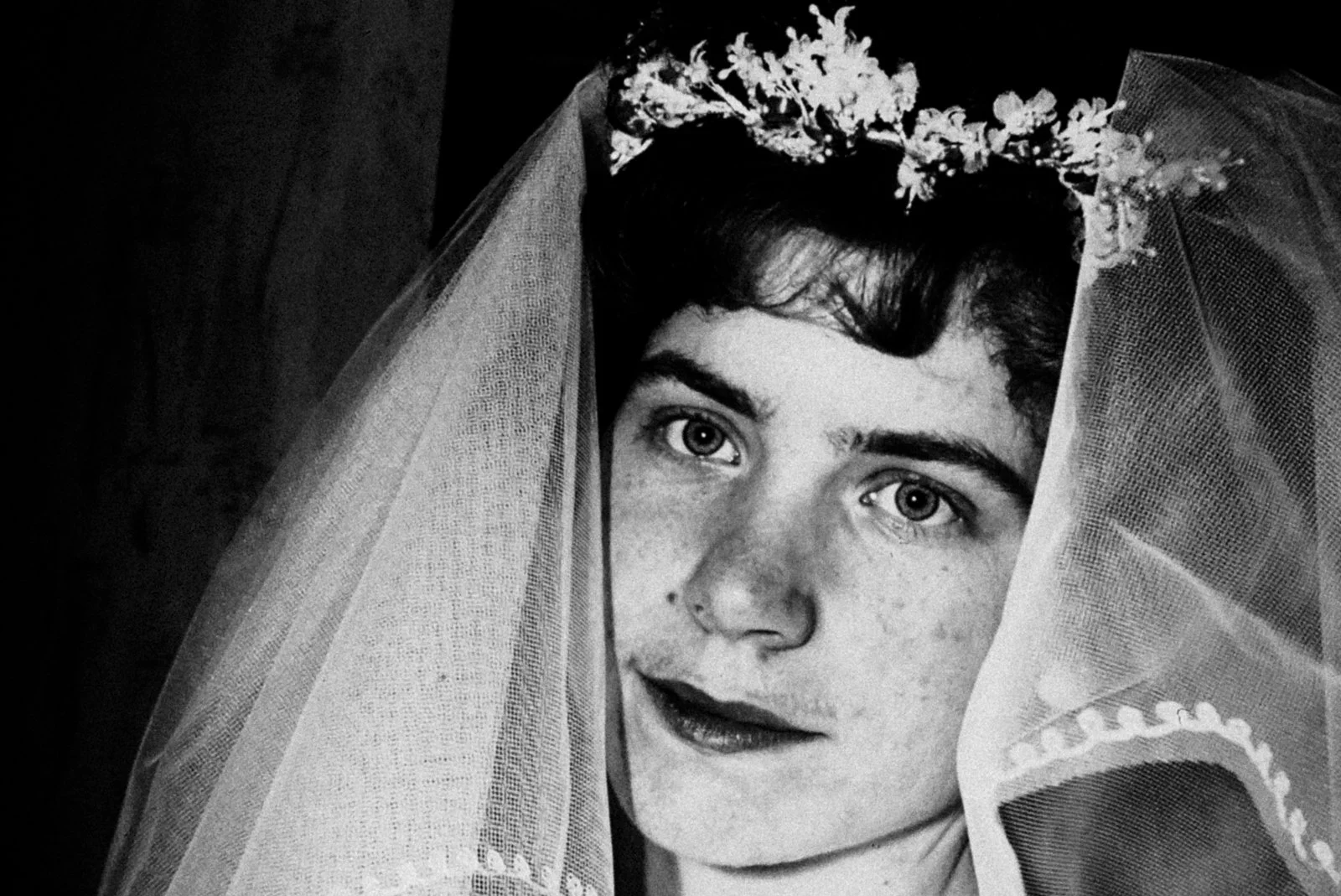
And then there is this obstinate return: the portrait of my grandfather. Swept up by the currents of Nazism, like so many ordinary men whom History required in order to become possible. This figure reappears in Todtnauberg as a dark leitmotif, echoing Celan’s Todesfuge: “der Tod ist ein Meister aus Deutschland.”
Celan’s “Master from Germany” — that is him. My grandfather. Not a caricatured perpetrator, but an ordinary man. And it is precisely that ordinariness — yes — that makes one tremble.
Todtnauberg is this: refusing to look away. Accepting that history does not stop in books. That it colonises families, gestures, the folds of language. That it also shapes how we do — or do not — recognise the rise of today’s dangers.
Because what is returning now is clear: authoritarianism settling quietly, the re-entry of dehumanisation into public language, state violence justified in the name of security, militarisation presented as inevitability. A familiar sound. A cycle repeating.
The images of Todtnauberg offer no lesson. They open a space. A place where we may still ask: what, in this landscape, is coming back? And above all: what do we — each of us — do with our origins, our inheritances, this past that continues to look back at us?
It is the only question that matters. And it does not ask for comfort, but for courage: the courage to look at where our responsibility truly begins.