Texts
Critical writing on the work, and reflections by the artist. On seeing, on making images, on what persists.
Sergio Larrain, or the Image That Appears
One Wednesday in 1982, from his house in Tulahuén, in the Chilean precordillera, Sergio Larrain sits down to write to his nephew. He is fifty-one years old. Thirteen years earlier, he had set down his camera and chosen withdrawal. He lives without a telephone, divides his days between yoga, drawing, and meditation, and communicates with the outside world only by letter.
A phenomenology of wandering
One Wednesday in 1982, from his house in Tulahuén, in the Chilean precordillera, Sergio Larrain sits down to write to his nephew. He is fifty-one years old. Thirteen years earlier, he had set down his camera and chosen withdrawal. He lives without a telephone, divides his days between yoga, drawing, and meditation, and communicates with the outside world only by letter. Over the three decades that separate him from his death in 2012, he will exchange more than five hundred letters with his sole correspondent, Agnès Sire. The letter addressed that Wednesday to Sebastián Donoso, who wants to become a photographer, is among his most widely known. Read aloud by Donoso at the Catholic University of Chile in 2009, published in 2013 in the monograph edited by Sire and Xavier Barral, it has become one of the foundational texts of contemporary photographic thought.
What strikes one upon rereading it is that Larrain theorizes nothing. He describes. But his description, in its unadorned precision, says what another tradition — that of Continental phenomenology — had named in other words. Larrain does not cite Husserl, does not invoke Heidegger, has likely never opened Merleau-Ponty. And yet the letter to his nephew can be read as a phenomenology of photography written by someone who had practised it for thirty years. That is the reading I would like to propose here. But it presupposes that one first understand what Larrain had to leave behind in order to write it.
The Magnum misunderstanding
Sergio Larrain joined Magnum in 1959, at the invitation of Henri Cartier-Bresson himself, to whom he had shown his series on the street children of Santiago. He became a full member in 1961. For the young Chilean from a cultivated bourgeois family — his father an architect, the family home filled with Matisse and Cézanne — the agency represented the highest summit photography could offer. He moved to Paris, worked for Paris Match, Life, Du, took on assignments: the Sicilian mafia, which he photographed from within after befriending the capo Giuseppe Russo; the wedding of the Shah of Iran and Farah Diba; the Venice Film Festival; the Juan Fernández Islands.
Very quickly, something began to grate. On 5 June 1962, Larrain wrote a letter to Cartier-Bresson which, without breaking off, made the fundamental misunderstanding plain. He had tried, he wrote in substance, to adapt to the group in order to learn and to be published. But he wanted to return to what seemed serious to him. He spoke of markets, of money, of the disarray that overtook him. He said he wanted to find a path that would allow him once again to move at a more vital level. It is a gentle, almost embarrassed letter — but it announces everything to come.
The misunderstanding was not circumstantial. It was structural. Cartier-Bresson conceives of photography as a geometry of the instant — a coincidence to be caught. Larrain conceives of it as a meditation, as a state in which something can occur. Photojournalistic commissions demand that one go to where the event is to take place, return with saleable images, and meet the editorial calendar. That temporality is, for Larrain, alien to whatever makes an image possible. He begins to speak, in his letters, of lies. He returns to Chile. He collaborates with Pablo Neruda on the house at Isla Negra. He photographs less and less.
From Arica to Tulahuén
In 1968, Larrain meets Óscar Ichazo, a Bolivian philosopher and spiritual master who is gathering a community around himself in Arica, in northern Chile. Ichazo teaches a demanding syncretism — Sufism, Zen Buddhism, Gurdjieff, yoga, the enneagram — accompanied by guided psychotropic experiences and rigorous psychophysical practices. Larrain settles there in 1969 and stays for three years. During that period he breaks with Magnum, writes on ecology, takes LSD and peyote, practises yoga intensively. He photographs almost nothing. The break with Ichazo will come in 1972, against a backdrop of personal tensions: it is said that Larrain discovered the practices the master reserved for himself with the women of the group. He leaves Arica.
The following year, Pinochet's coup d'état overtakes Chile. Larrain, who had covered the golpe as a reporter, withdraws definitively. He settles first in Ovalle, then in the more remote house at Tulahuén, in the precordillera. He will remain there until his death. It is there that he radicalizes the gesture: he burns part of his own photographs, withdraws negatives from Magnum — it is Josef Koudelka, who had kept copies of several of his images, who will save the work. Refusal of exhibitions. Refusal of publications. Meditation, yoga, drawing, oil painting, gardening. The telephone is disconnected. Postal correspondence becomes his only window.
If this trajectory bears repeating, it is not for the sake of biography. It is because the 1982 letter to his nephew can only be understood from what preceded it. Larrain's withdrawal is not an ascetic whim. It is the outcome of an incompatibility he had lived in his body: between a photographic economy founded on production, on the calendar, on performance, and a photographic experience that could only occur outside that economy. When he writes to Sebastián that one must wander, must not force, must wait for the apparition, he is not proposing a style — he is transmitting a discovery that cost him Magnum, Arica, and finally the world itself.
Withdrawal as condition
This series of ruptures can then be read as the slow execution of a philosophical gesture. Husserl named epoché the suspension of the natural attitude — the bracketing of what we take for granted, so that phenomena may appear once more. Husserl performed that gesture at his desk, by method. Larrain performs it with his life. To leave Magnum is to suspend the institution. To leave Arica is to suspend the master. To leave Santiago for Tulahuén is to suspend what he himself called the civilization of illusions. Each of these suspensions is not a renunciation: it is a condition. In order to see, one must first have set aside what was preventing seeing. In order to write to Sebastián, one must first have stopped being a Magnum photographer.
It is in this patiently opened clearing that the letter becomes possible. And it is from this clearing that it speaks.
Stepping out of the screen
The heart of the letter holds in a single word: to wander. Go to Valparaíso or Chiloé, walk through unknown streets, sit beneath a tree when tiredness comes, buy a banana or a piece of bread, take a train without a fixed destination, sometimes sleep outside in a sleeping bag. Look, draw, look again. And then this sentence, which has travelled the world: the conventional world is like a folding screen, and one must step out of it during the period of photography.
The conventional world as folding screen. The phrasing does not paraphrase phenomenology; it speaks it from within. What Husserl called the natural attitude (natürliche Einstellung) is precisely the conventional world: the everyday world taken for granted, the obviousness of what is there, the mechanical confidence in which we dwell without seeing any longer. The phenomenological method begins by suspending that confidence. Not denying the world, but bracketing it so that things may appear once more. What Husserl did by method, Larrain did with his feet. It is in walking, in wandering, in the suspended time of the train, in the unfamiliar street, that the conventional world withdraws and lets things come.
This pedestrian phenomenology is no metaphor. It is constitutive of what Larrain photographs. The staircases of Valparaíso, the children of the streets in Santiago, the covered passages of his 1958–59 London: those images were not sought by a willing eye. They were received by a wandering body. To understand them, one must accept that the phenomenological reduction can be walked.
Never to force — Gelassenheit with a Leica
The other commandment of the letter, perhaps the deeper one, is stated negatively: never to force. When the impulse does not come, one does something else. One does sport, draws, looks at the work of others. One pins to the wall the images one loves and leaves them there for weeks, for months, until the gaze ripens. Seeing takes time. And Larrain to his nephew: never force a photographic outing, otherwise the poetry is lost, life falls ill, it is like trying to force love or friendship — it is impossible.
This is not a poetic flourish. It is, said in the language of a Chilean photographer, what Heidegger named in German Gelassenheit, in his 1959 Discourse on Thinking — releasement, serenity, letting-be. Heidegger opposes will (das Wollen), which seizes, calculates, produces, to Gelassenheit, which welcomes and lets things come. Will is the calculative thinking of the technological age, the kind that demands the world as a resource. Gelassenheit is what may yet survive of meditative thinking, of a relation to the world that does not summon it to respond.
Larrain does not read Heidegger. But he writes, from his Chilean cabin, the same opposition. And his trajectory bears witness to it with an almost disquieting coherence: what he left behind at Magnum, at Arica, in the civilization of illusions, was precisely the regime of will — the programmed photographic outing, the master who demands, the event to be covered. The forced outing is the photographic act under the regime of will: anxious, productive, alien to whatever wanted to appear. The wandering under the tree, the banana, the unknown street, is the photographic act under the regime of letting-be. Gelassenheit with a Leica.
One can, in passing, extend this thought toward Vilém Flusser, who thought the photographic apparatus as a programme — that is, as an automation of the will, and more radically as a programme that photographs through us. To think with Larrain and Heidegger is to think the photographic act as the place where, against the programme, something else may still occur. A Gelassenheit before the apparatus. The minimal gesture — a pocket Leica, the smallest enlarger, the strict indispensable — is not only a material frugality: it is a strategy of de-automation. Less apparatus, more world.
The walking body
Another sentence in the letter deserves a pause: let your shoes carry you slowly, as if you were drunk on the pleasure of looking, humming softly. The shoes carry. The body wanders. The eye is drunk. This is not the geometry of the Cartier-Bressonian instant, in which an eye frames a world external to it. This is Merleau-Ponty's lived body — the body that is not before the world but in the world, that does not observe the visible but inhabits it.
The 1945 Phenomenology of Perception describes perception as something the body does, not as a datum the mind processes. The lived body is the place where the world appears. Larrain photographs from such a body. He sets his Leica on the ground, against a wall, in the dust of the street; he takes angles that only a body which crouches, leans, allows itself to be traversed by the place, can take. His framings sway. The low-angle shots, the foreground blurs, the light that cuts and tears: these are not effects — they are the traces of a body engaged in its perceptual field.
When he tells his nephew to be invested in reality, as if you were swimming underwater, letting nothing distract you, he describes, without knowing it, phenomenological Leiblichkeit — the flesh, embodied corporeality as the condition of vision. It is not a matter of seeing the world but of being of it.
The image as apparition
There remains the question of the image itself. To Sebastián, Larrain writes that the images will come like apparitions. To Agnès Sire, in another letter, he says that a good photograph is born of a state of grace. Apparition, state of grace: the vocabulary is not mystical by accident. It says that the image, for Larrain, is not a captured object but an event of phenomenality. Something that gives itself.
In the Husserlian language, the phenomenon (Phänomen) is what appears, das Erscheinende. The phenomenological method does not produce the phenomenon — it lets it appear by suspending what would prevent its appearing. The letter to the nephew, in this sense, is wholly a manual of phenomenological practice for photographers: how to place oneself in the condition where the phenomenon may occur. The minimal instrument, the wandering, the not-forcing, the walking body: these are the means of a receptivity.
This is what finally distinguishes Larrain's photography from the contemporary Magnum doxa. His images were not seized — they were granted. And that is why, when one looks at them, they have a different temporality from the reportage of their time: they do not capture a moment, they bear the mark of a body that knew how to wait.
The letter, or slow transmission
Why is it under the form of the letter that all this could be transmitted? Because the letter is itself a slow form. It assumes a postal delay, a body addressing another body across distance, a private temporality that does not align itself with the publicity of the manual. It speaks first to one person, and only incidentally, later, when heirs decide to publish it, to others. Rilke's Letters to a Young Poet, Cézanne's letters to Émile Bernard, and now Larrain's letters to Donoso: in the history of art, the letter is the place where a knowledge is said without claiming to constitute a doctrine.
That Sebastián Donoso chose, in 2009, to read the letter aloud rather than to talk about it says something essential. The voice that restores the words of the absent uncle, before a lecture hall, lets one hear what no commentary could replace: the cadence of an addressed speech. A speech that does not exhibit itself, but arrives.
In the noise of the contemporary photographic field — where images count, circulate, perform — the Tulahuén letter pursues its slow work. It is a phenomenological clearing within the programme. It reminds us that before the question of what we photograph comes the question of how we are present. A pedagogy of wandering, of not-forcing, of grace.
A letter, in other words, that goes on teaching us how to let an image appear.
Diffraction
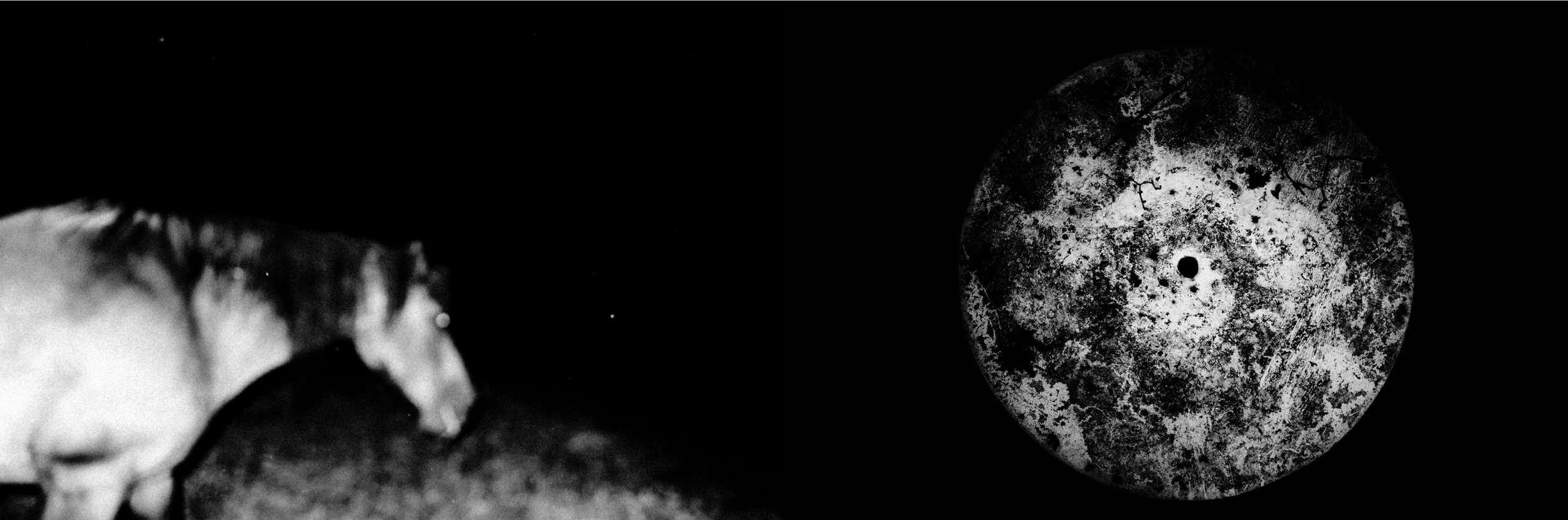
In this essay, philosopher Claude Molzino reads Koch's photography through the optical law of diffraction — a single light source scattering into fragments. The black-and-white images, drawn from two decades of work across continents, are not documents but interrogations: the world is summoned to reveal what it conceals.
Claude Molzino — "Diffraction"Critical text on the work of Matthias Koch. Originally written for Unheimlichkeit (Les éditions du Tanargue, 2016).
In this essay, philosopher Claude Molzino reads Koch's photography through the optical law of diffraction — a single light source scattering into fragments. The black-and-white images, drawn from two decades of work across continents, are not documents but interrogations: the world is summoned to reveal what it conceals. Molzino traces how Koch's stark framing and deepened blacks produce an aesthetic of unease — Unheimlichkeit — in which the familiar becomes strange and the fragile becomes visible. Drawing on Lévinas, Barthes, and Heidegger, the text argues that these photographs reverse the act of looking: it is ultimately the images that watch us, calling us to responsibility before what is vulnerable, present, and exposed.
(Full text in French below.)
Diffraction, une loi d'optique: c'est ce devant quoi nous place le présent recueil d'une soixantaine de photographies que Matthias Koch a sélectionnées au sein des différentes séries, nombreuses, qu'il compose depuis une vingtaine d'années. Toutes ces photographies présentent des fragments – Stücke, des morceaux, des bouts – de monde, le nôtre. Ces images ont été cueillies dans tous les coins du monde, mais cela n'importe pas ici; les contextes et les origines sont multiples, la diversité des continents et des cultures disent le grand voyageur qu'est le photographe, et pourtant toute particularité exotique et simplement anecdotique est effacée, non pas niée, mais dépassée, relevée par la vision qui porte toutes ces photographies et les éclaire ou plus précisément, les fait naître de la clarté singulière qui la caractérise. Car telle est la loi de la diffraction qu'il faut bien une lumière une au point de départ de cet éclatement en morceaux de la réalité capturée par l'objectif; au démembrement il faut une assise d'unité et c'est donc celle-ci dont il nous revient d'interroger l'identité. C'est en effet bien une question d'identité qui se joue dans ces clichés, non celle du photographe, mais celle du monde qu'il entend montrer. En même temps que ce morcellement du réel, le photographe nous délivre la sienne vision par laquelle nous pouvons saisir tous ces éclats visuels comme autant d'échantillons du monde contemporain dans son indifférenciation planétaire de plus en plus homogène qui rend sans importance de savoir si le cliché a été pris à Amsterdam ou à Hong-Kong, si l'on est à Athènes, à Caracas ou en Seine-et-Marne; c'est justement cet espace isotrope et isomorphe de la modernité nivelante, écrasante, écrasée sous le règne de la technique et du calcul comme seuls étalons ontologiques qu'il s'agit de regarder en face. Le proche et le lointain, le familier et l'exotique apparaissent sous le même jour, la banalité quotidienne d'ici ou d'ailleurs révèle son identité au sens d'une apparente similitude, mais l'œil du photographe vise à en dévoiler l'identité au sens de l'essence: en effet, le geste photographique de Matthias Koch est animé d'un esprit philosophique qui veut dévoiler, faire connaître, porter au questionnement et donc à la dimension du sens; et pour être mis en question, le monde est mis à la question, ce qui donne à ces images un goût de violence alors qu'elles ne le sont jamais, ni intrusives, ni voyeuses, mais c'est la manière de traiter l'image qui en est cause et qu'il faut ici préciser, le style dans ce qu'il a de propre au photographe et qui est inséparable de sa vision.
Tout d'abord, l'espace s'ouvre dans la vérité originelle du Noir-et-Blanc, c'est-à-dire dans une opération d'abstraction par rapport à la réalité naturelle perceptive, non qu'il s'agisse de la quitter mais bien au contraire de la révéler dans son sens et parvenir à son intériorité; dans ce contraste chromatique, les noirs sont accentués, alourdis même, car selon l'œil de Matthias Koch, il faut l'ombre pour rendre visible la lumière, et il faut la lumière pour rendre la réalité visible. Avouons que le résultat n'a rien de la légèreté désinvolte du tourisme photographique et bien souvent le motif baigne dans une clarté crue comme déversée par l'ampoule nue qui pend au plafond d'une chambre de torture; de plus, le photographe qui veut aller à l'essentiel construit le fragment qu'il découpe dans un cadrage singulier qui le structure et pour ainsi dire le fige par cet éclairage d'interrogatoire: le monde est sommé de cracher le morceau comme on dit, de cesser de dissimuler, de mentir, d'aveugler, car cette violence dans le traitement de la photo n'est pas gratuite, elle est la forme visuelle de l'interrogation et si une suspicion de tromperie préside à la captation en image du réel, ce n'est pas par malveillance misanthrope mais par volonté de vérité; ce qui fait de cette photographie une pratique du paradoxe, car il s'agit de dénoncer ce qu'il y a de fallacieux dans le monde contemporain du spectacle par la mise en image, retournant la vision irréfléchie en regard: faire voir l'illusion, montrer le trompe-l'œil mais sans s'enivrer dans un second degré trop souvent complaisant avec ce qu'il fustige. Il ne s'agit pas d'exhiber et donc de se montrer aussi soi-même comme belle âme, mais de témoigner, et la simplicité formelle, l'indifférence à l'égard du matériel et de ses performances techniques sont ici un gage d'authenticité c'est-à-dire aussi d'une certaine souffrance. La dénonciation de la cruauté et de la bêtise de la consommation comme règle de vie, de l'univers du factice et de l'obsolescence des choses et des produits qui rendent les hommes eux-mêmes facultatifs et inconscients de l'être voire heureux, l'accusation de la mise à sac planifiée de la nature, du crime organisé généralisé comme contrat social, ...etc, tout ce que l'on ne peut plus ignorer de la réalité de notre époque, c'est ce que contient le noir densifié de ces images dans leur découpage souvent impitoyable. Devant ces photos, s'impose immanquablement à moi le souvenir de ces mots écrits par Christian Bobin dans La grande vie:
Écrire – glaner ce qui a été abandonné à la fin du marché, fin du monde.
Robert Antelme qui a été déporté et a failli mourir dans un camp de concentration dit à un ami sur un trottoir parisien: je ne vois pas de différence entre le monde et les camps de concentration. Quitter sa femme parce qu'elle vieillit et devient moche, ajoute-t-il, c'est du nazisme.
La loi de continuité dans les phénomènes a beau impliquer - et il ne s'agit pas de l'oublier et de tout confondre ou rabattre sur un seul niveau ce qui reste irréductible - des seuils, les différences produites par les passages à la limite n'en sont pas moins permises par le caractère franchissable de ces seuils dont la traversée confirme la continuité du réel au moment même où il semble la nier en la dépassant. Disons-le autrement, quand le sol est glissant, l'on passe insensiblement d'un degré à un autre pour ne s'apercevoir souvent que trop tard qu'il est trop tard. Aujourd'hui la planète tout entière est devenue glissante. C'est donc une teneur d'alerte que recèlent ces photographies dans l'âpreté de la tonalité qui les imprègne.
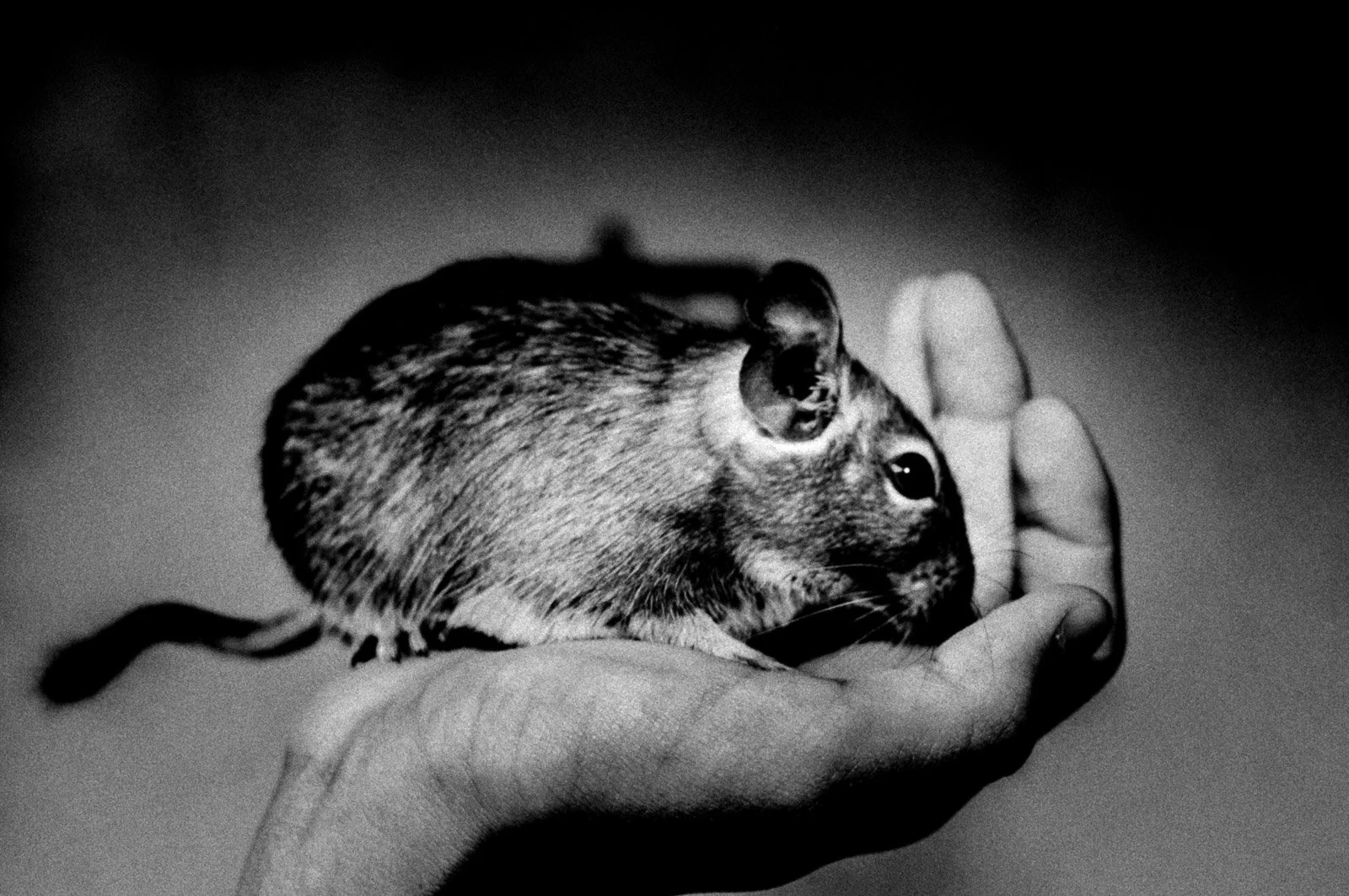
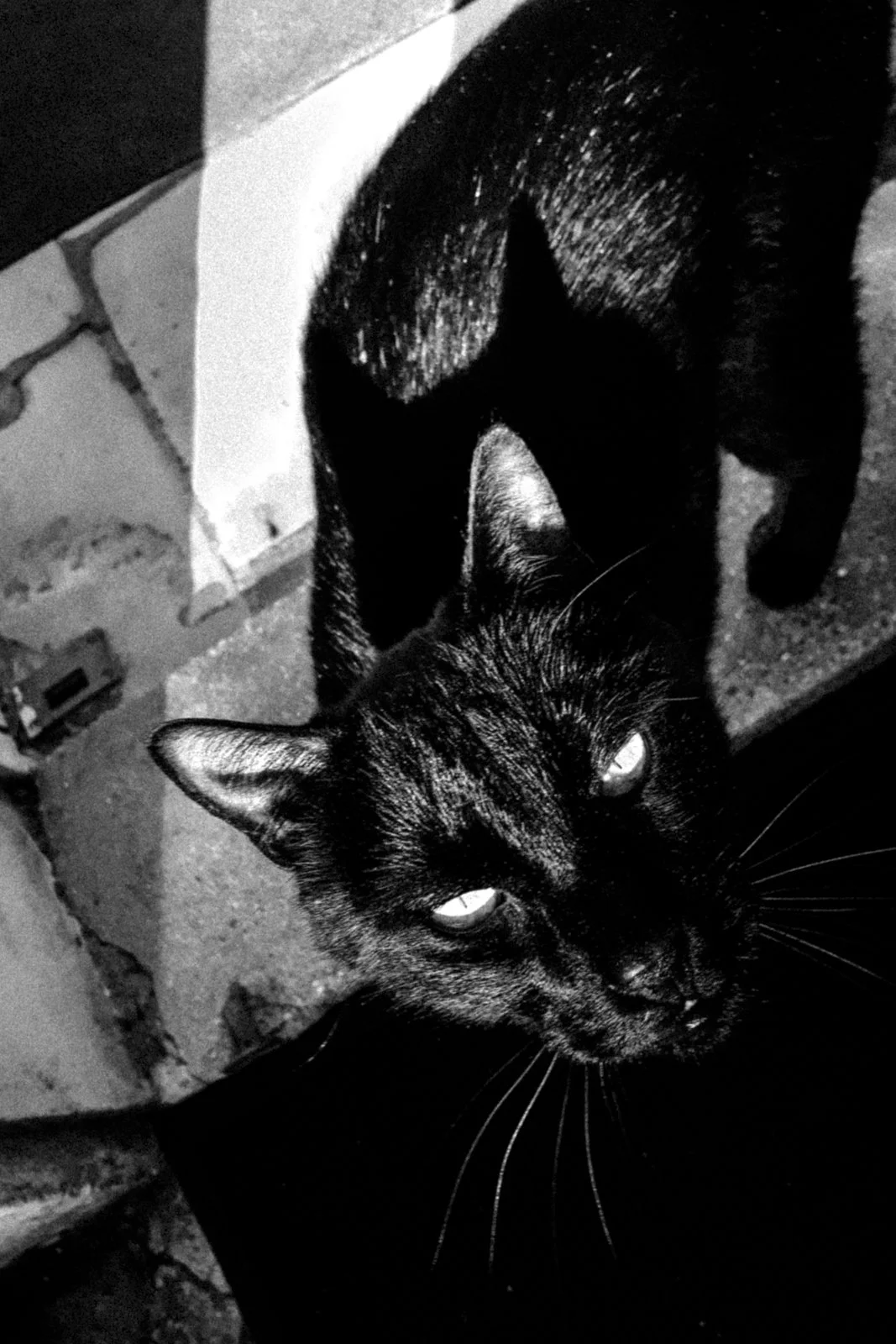
Mais dénoncer est un combat, qui ne peut être conduit qu'au nom de ce qu'il faut secourir, sauver, restaurer; autant dire que les photographies de Matthias Koch n'affichent pas une altière posture de critique et la bonne conscience qui va avec mais assument un courageux engagement pour la sagesse seule à même de préserver la vie, l'humanité, la nature en mettant en lumière leur vulnérabilité et leur irremplaçable valeur oubliées, recouvertes ou défigurées par la grande illusion babylonienne du monde contemporain orchestrée par le cynisme de ses souteneurs. Déplacer les lignes habituelles et acceptées sans réserve par une majorité résignée ou enthousiaste, décaler les visions familières, altérer les évidences et les conformismes, faire apparaître de l'inusité dans le trop bien connu, ouvrir à une altérité au sein du prévisible et maîtrisé, dans la banalité quotidienne révéler de l'étrangeté: Unheimlichkeit, le titre choisi par le photographe pour baptiser ce recueil n'a rien d'usurpé. L'on sait que l'inquiétante étrangeté, comme on traduit en général ce vocable allemand relève d'une zone trouble de la conscience lorsqu'un soupçon s'immisce sur le sens de ce que l'on perçoit et vit, lorsque l'évidence se fissure et que l'étonnement réveille de sa salutaire secousse l'esprit somnolant dans ses convictions lénifiantes; l'étonnement source du philosopher selon le Stagirite, fondement donc, du travail de la réflexion et de l'assomption d'une conscience responsable. Il s'agit de comprendre que tout pourrait être autrement, un autre monde est – encore – possible, mais aussi que tout pourrait ne plus être, entourés et comme gardés dans un enclos tel un troupeau que nous sommes tous par les milliers d'ogives nucléaires prêtes à fuser. Matthias Koch, comme tout opposant à l'industrie nucléaire, sait la fragilité émouvante et merveilleuse (c'est le même mot que « étonnant » en Grec) de la vie, combien elle demande de sollicitude et d'amour c'est-à-dire de responsabilité et combien cette responsabilité s'est diluée jusqu'à disparaître complètement dans les arguties des sophistes et des idéologues de la Finance internationale. Le petit loir palpitant au creux d'une main humaine, le profil de l'enfant tout entier tendu vers un ballon lancé en l'air, scène que l'on devine car elle est suggérée par sa seule ombre sur un mur, le cheval broutant son herbe avec des allures de gravure de Dürer, sont, parmi d'autres photographies ici présentées, des témoignages du regard bienveillant mais nostalgique du photographe. Ce sont des images ambigües, qui délivrent la vulnérabilité de tout ce qui est vivant et pouvant être objet de sollicitude ou tout aussi bien victime de cruauté, et sans doute l'Unheimlichkeit révèle-t-elle notre propre ambivalence intérieure, captifs que nous sommes de l'entre-deux de la vie et de la mort, du Bien et du mal, hôtes intimes coexistant en nous : le petit animal tremblant est à la merci de la main qui le porte, l'enfant jouant au ballon n'est perçu que dans son ombre c'est-à-dire son absence comme ces étranges clichés de vies soufflées à Hiroshima, le cheval est aussi celui du cauchemar de Füssli. Bien d'autres clichés que ces trois là suscitent ce sentiment à la lisière du malaise, car si forcer la noirceur/le noir de ce qui est dénoncé est l'affirmation d'une cohérence entre l'esthétique et l'éthique, en revanche cadrer un motif innocent pour en intensifier la présence en accentue du même coup la fragilité et donc le potentiel pouvoir de cruauté de qui le regarde; et c'est bien ce que produisent toutes ces photographies: leur inquiétante étrangeté est la force de la présence avec laquelle elles s'imposent à notre regard, elles nous appellent, nous demandent, nous convoquent et c'est finalement elles qui nous regardent; on ne peut provoquer mieux le concernement du spectateur, le chat noir de la couverture inaugurant ce renversement avec son regard insinuant, mi-obséquieux, mi-narquois. Nous sommes invités à voir et respecter parce que nous sommes capables d'ignorer et mépriser; le visage est exposé, menacé, comme nous invitant à un acte de violence. En même temps, le visage est ce qui nous interdit de tuer. Quand Lévinas parle du visage, il signifie l'altérité qui apparaît dans l'identité comme sa lumière même; qu'il me soit ici permis de détourner quelque peu sa pensée pour attribuer à la totalité du réel et non à la seule humanité cette dignité infinie du visage: et la chaise vide, le gant oublié par terre, la trace de la méduse, l'empreinte des pas dans le sable, les milliers d'étoiles au ciel d'été sont comme autant de cris jetés de la même présence qui appelle notre regard, notre soin, notre présence en retour. Cette mise en évidence insistante de la présence de ce qui est présent, on pourrait la caractériser comme l'expression par le geste photographique de la différence ontologique si l'on voulait développer une interprétation phénoménologique de ces images. L'on s'en tiendra ici à définir cette conversion du regard à laquelle appelle le photographe comme un plaidoyer pour l'être de ce qui est, la vie de ce qui vit, la merveille fragile de tout ce qui parvient à son éclosion depuis le néant.
Editing
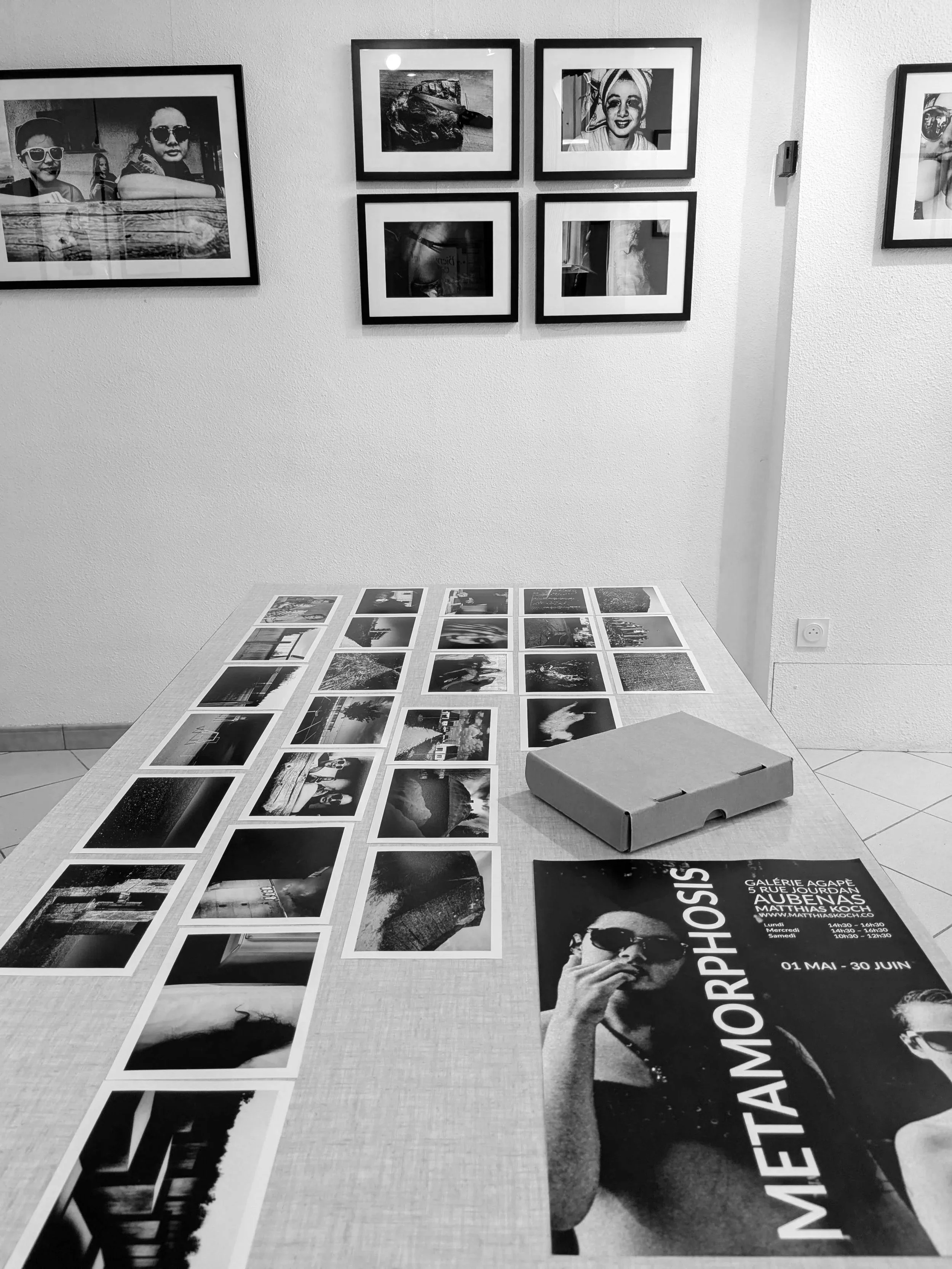
Photographing is accumulating. But a series does not exist in volume — it exists in decision. I have spent years photographing memory, absence, and the fractures of the present. What I have learned is this: the work does not happen in front of the subject. It happens afterwards, alone, in the repeated confrontation with one's own images.
Photographing is accumulating. But a series does not exist in volume — it exists in decision. I have spent years photographing memory, absence, and the fractures of the present. What I have learned is this: the work does not happen in front of the subject. It happens afterwards, alone, in the repeated confrontation with one's own images.
The Edit as an Act of Thought
In my practice, editing is not simply one step among others. It is where the work truly begins — or rather, where it reveals itself for what it really is.
Photographing is accumulating — hours, years, thousands of possibilities. But a series does not exist in volume. It exists in decision. Every image kept is an affirmation; every image discarded, a refusal. This double movement — keeping, rejecting — is what gives a body of work its necessity, its interior tension, its reason for being.
Time as a Condition of Editing
My series are built over the long term. Todtnauberg, Unheimlichkeit, Resonances — none of them emerged from a single session or a single moment of clarity. They revealed themselves through repeated returns to the images, through gradual connections, through removals that opened new coherences. Editing is a form of deferred looking — a dialogue with oneself across time, where the person looking is no longer quite the person who photographed.
This temporal distance is a condition, not a luxury. It allows one to see without the intoxication of the moment, without the fatigue of the session, without the attachment to the circumstances surrounding the act of taking the picture. What seemed strong can turn out to be anecdotal; what had been overlooked can suddenly become central. The image detaches itself from its context of production and reveals itself for what it truly is.
Larraín: The Series as a Living Organism
Sergio Larraín is perhaps the most radical example of this relationship between editing and time. He spent decades reworking his archives — not to exploit them commercially, but because his understanding of what he had photographed continued to evolve. His images of Valparaíso — taken in the 1950s and 1960s — went through very different states of editing at different periods of his life. What he showed at 30 was no longer what he showed at 60. Not because the images had changed, but because he had changed, and his relationship to memory, to childhood, to the city had been transformed.
Larraín spoke of photography as a form of meditation, an almost spiritual practice. Editing participated in the same logic: it was not about selecting the "best" images in any technical sense, but about finding those that resonated with something essential, intimate, sometimes inexplicable. He accepted this irrational dimension in the act of selection, and it is precisely this that gives his work its particular depth — that feeling that every chosen image is there for reasons words alone cannot exhaust.
Moriyama: Editing as Resistance to the Flow
Daido Moriyama occupies a paradoxical position in the history of photography: he is one of the most prolific photographers who has ever worked — tens of thousands of images produced over more than sixty years — and yet his published body of work possesses a striking formal coherence. This paradox is only possible through an editing practice of extreme rigour, all the more remarkable for being almost invisible.
His method is one of deliberate saturation. He photographs continuously, compulsively, as though interrupting the flow risks missing something essential. But it is precisely because the flow is inexhaustible that editing becomes a vital necessity — not to control production, but to give it meaning retrospectively. Moriyama returns constantly to his archives, re-edits them, republishes them in new forms, recomposes books from older material placed in new contexts. The same image can appear in several books carrying radically different meanings depending on what surrounds it.
What his practice reveals is that editing is not a definitive gesture but a repeated one — an endless conversation with one's own archives. There is no "final" version of a body of work; there are successive states, each revealing something the previous state could not see. This conception of editing as an open, never fully closed process resonates deeply with my own experience of working in long series: a series is never truly finished, only momentarily stopped.
Frank: Editing as Subversion
Robert Frank offers a different example still — perhaps the most subversive. When he edited The Americans, he deliberately set aside the "well-made" images in favour of blurred, poorly framed, backlit photographs — images that any art director of the time would have rejected outright. His editing was an act of rupture with the dominant codes of documentary photography in the 1950s. He was not searching for representational clarity but for something more restless, closer to subjective perception, to raw affect.
What is remarkable about Frank is that this editing reflected a worldview, not merely a style. The unease, the alienation, the loneliness he wanted to show in postwar America — these things could not be shown through smooth, well-exposed images. The form of the editing matched the form of the argument. The selection was already an interpretation.
What Editing Reveals About Oneself
What these examples share — beyond their considerable differences — is that editing always ends up revealing something the act of photographing alone could not yet know. Editing is the moment when one becomes aware of what one was truly searching for, even if that was not apparent at the shutter's release.
In my own work, it is often in the editing that I understand the real subject of a series. I thought I was photographing a place; I discover I was photographing an absence. I thought I was working on collective memory; I realise it was a deeply personal memory structuring my choices all along. Editing is a mirror — uncomfortable, often, but necessary.
What I look for in a final selection is not the perfection of each isolated image, but the rightness of what they form together. The order, the silences between images, the breaks in rhythm — all of this produces a meaning that the act of photographing alone cannot anticipate. An image can be stronger in a certain position within the sequence than a technically superior image placed elsewhere. The context that images create for one another is part of their meaning.
Editing as Responsibility
There is finally an ethical dimension to this selection, particularly acute when working with memory and the fractures of the present. To keep an image is to decide it must be seen. This decision is never neutral. It engages a responsibility towards the photographed subjects, towards the historical and social context from which the images arise, towards the viewer who will trust them to grant access to something true.
Setting an image aside can be an act of restraint as much as of formal rigour. Some images are too legible, too explicit — they close down meaning rather than opening it. Others are too fragile, too intimate to withstand the public gaze without betraying themselves. Editing is also the art of knowing what must not be shown.
Editing is, at its core, the place where I answer the question I should have asked before pressing the shutter: why this image, and to say what? But it is precisely because one cannot always answer that question at the moment of taking the photograph that editing is irreplaceable. It is what allows photography to move beyond the gesture of capture and become an act of thought.
You’re looking too quickly to really see.
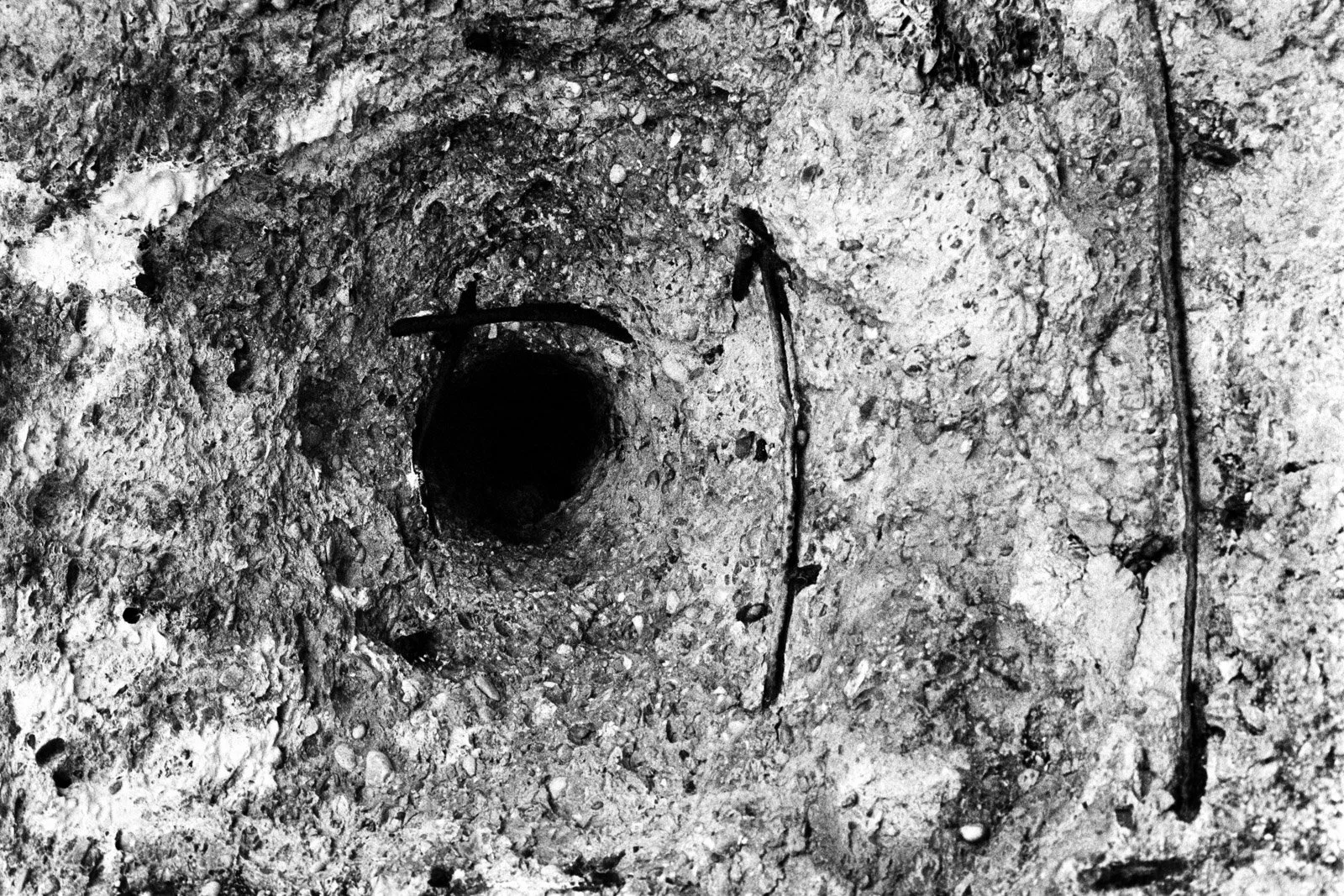
I make photographs that don't give themselves up at a glance. Series that take ten years. Images that ask you to stop — genuinely. In a world that accelerates, this has become a position. Here is why I hold it, and how to read what I do.
I make photographs that don't give themselves up at a glance. Series that take ten years. Images that ask you to stop — genuinely. In a world that accelerates, this has become a position. Here is why I hold it, and how to read what I do.
I was born in Germany. I have lived in Ardèche for many years. Between these two territories — one weighted with a history I did not live but nonetheless inherit, the other rural, peripheral, strangely shielded from certain pressures — a practice has formed that I could summarize as follows: I photograph what time leaves behind. Not events — their residue. Not things — their echo.
This is not a slogan. It is a working constraint, almost a negative discipline. It forbids me the spectacular image, the decisive moment, beauty that is too immediately available. It commits me to duration — to returning to the same places year after year, to the patient accumulation of images that, taken individually, often seem to amount to very little. But together, they exert a pressure. They produce something that resembles less a demonstration than a haunting. It is that haunting I am trying to build.
I do not look for the light that beautifies. I look for the light that reveals — the light that makes you feel the weight of what has settled there.
The tagline of my website, Not things. Their echo, is often read as a poetic formula. It is first of all an operational instruction. When I arrive at a place — a forest, a threshold, a battlefield, an empty room — my question is not: what is beautiful here? It is: what remains? What, in this place, is not yet the past? What continues to act, silently, on the present?
Inheritance — Günther Anders and the Promethean Shame
The question of German inheritance runs through my work, sometimes subterranean, sometimes frontal. I did not live through the war. I carry no direct guilt. But I grew up inside a culture that long oscillated between two equally unsatisfying postures: silence and confession. Neither suits me. Photography offered me a third path.
The philosopher Günther Anders — born Günther Siegmund Stern, exiled, companion of Hannah Arendt, witness to Hiroshima — named Promethean shame the particular feeling that grips human beings in the face of their own creations: the shame of being inferior to the machines they have produced, of being incapable of fully sensing the reality of what they make and what they destroy. In The Obsolescence of Man, he diagnoses a humanity that can produce the apocalypse without being able to imagine it — that acts at a scale its own sensibility can no longer follow.
This is a thought that touches me directly. To be the heir of a generation that produced catastrophe without being able — or willing — to measure its weight: that is precisely the terrain I explore in the series Todtnauberg. The title comes from the Black Forest village where Heidegger had his hut — and where Paul Celan came in 1967, hoping for a word of recognition that never came. Celan wrote a poem. The absence of speech entered the mythology of European intellectual trauma.
My series departs from there and extends: toward Amsterdam, toward the threshold of the Anne Frank House, toward Athens, toward Verdun. This is not a documentary project. It is an investigation into what these places still hold — into what, within them, continues to exert pressure on anyone willing to stop. My work does not seek catharsis. It seeks to hold this weight inside the frame. Without resolving it. Without dramatizing it either. Simply: leaving it present, opaque, irreducible.
A photograph does not show what happened. It shows what remained — and that is a different truth, harder, more durable.
Resonance — Hartmut Rosa against acceleration
My recent work has been built in dialogue with the thinking of sociologist Hartmut Rosa, and in particular his concept of resonance. Rosa describes late modernity as a condition of generalized acceleration: not only do things move faster, but the very relationship to the world is transformed. The world becomes more and more available — everything accessible, quantifiable, optimizable — and less and less resonant: things stop truly touching us, affecting us, changing us. We manage them. We no longer encounter them.
The series Resonances is built against this logic. It asks: what, today, still possesses the capacity to vibrate at a frequency we can feel? Which places, objects, presences resist total availability? The series also carries a political edge I do not avoid: we are living through a moment of authoritarian resurgence in Europe. My images carry that unease — not as a manifesto, but as a darkness gathering at the edges of the frame.
These images ask time of the viewer. Not effort, not specialized knowledge — simply the disposition to be touched. In a world defined by acceleration, that demand has become almost radical. It may be the most political thing I do: insisting, calmly and without apology, on another speed.
Territory — Ardèche, Europe, chosen margins
Ardèche is not a backdrop. It is an anchor — and a choice. Living far from the centers, far from Paris and Berlin, demands a form of autonomy I consider a working condition, not a handicap. Distance from the usual circuits of validation forces a kind of honesty: you cannot ask whether something will please before asking whether it is true.
This territory also shapes my eye in more concrete ways. The Ardèche landscape — its basalt, its ridgelines, its half-abandoned villages, its strongly marked seasons — has entered my work not as subject but as tonality. There is in this territory a resistance to the picturesque, a roughness, a way of being old without being nostalgic, that corresponds to something in my practice.
And then there is what is being built here collectively. Éditions du Tanargue, a publication rooted in this territory proceed from the same conviction: that serious photographic culture can be built far from the major fairs, that it does not need spectacle to exist, and that slowness is not a lack of means but an ethic.
Writing as parallel practice
I work in parallel on a theoretical writing practice developed in dialogue with the philosopher Claude Molzino. These texts are not commentaries on the photographs — they do not explain them or accompany them pedagogically. They are distinct investigations bearing on the same questions: how can an image carry time? What remains of a place after what defined it has disappeared? What is the status of the trace in a culture of the instantaneous?
They coexist with the photographs in a tension I do not try to resolve — discursive thought and thought through images do not say the same thing, even when they address the same object. That difference is precisely what interests me.
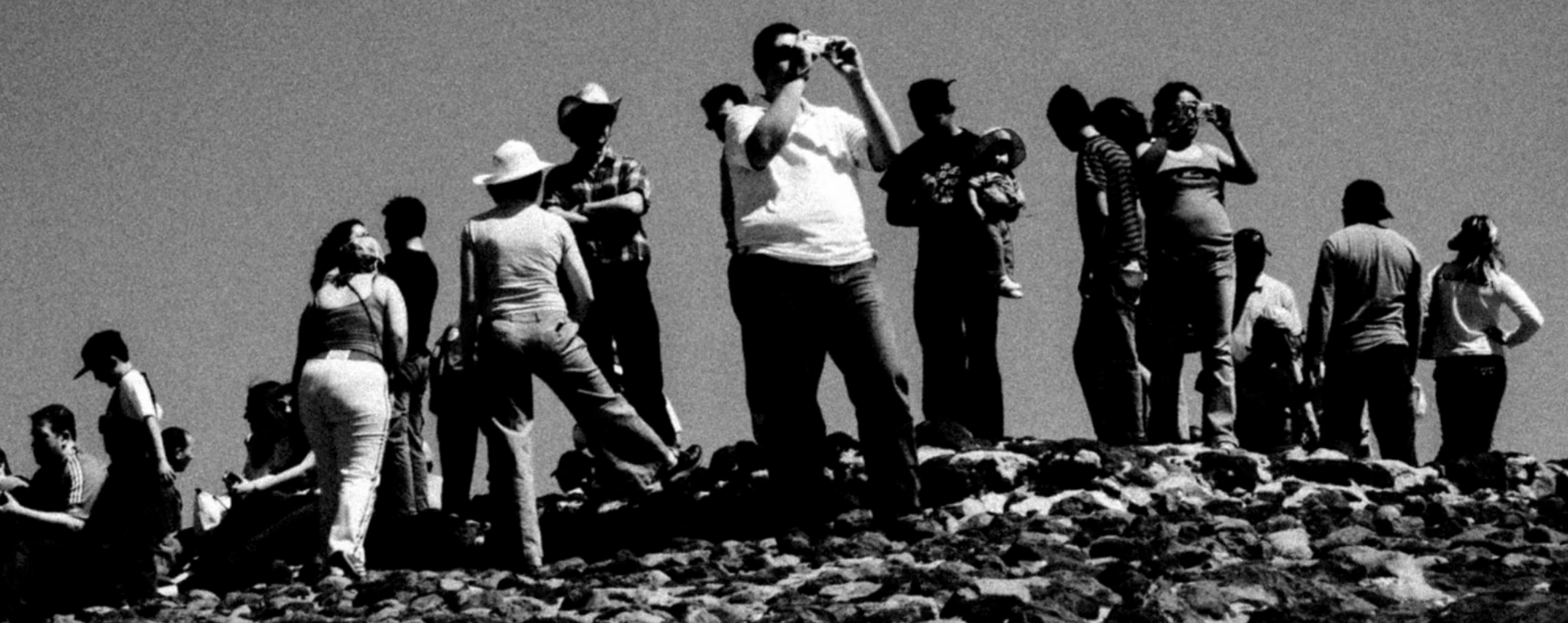
Manifesto for an Unfinished Photography
In recent months, as I returned to my archives and revisited certain series I once considered finished, an obvious realization emerged: my work does not lend itself to closed, self-contained entities.
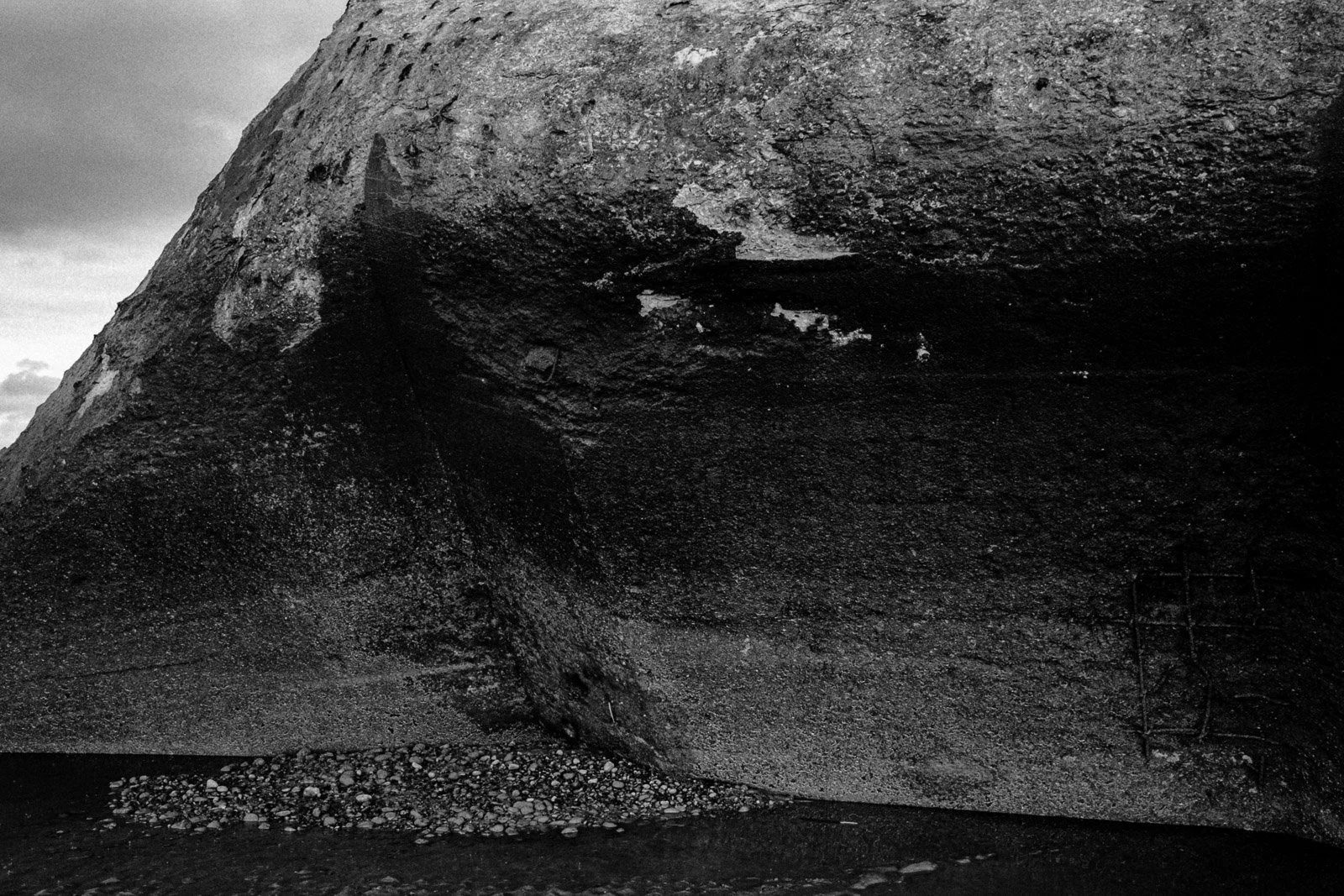
I do not believe in closed photographic series.
I do not believe in images permanently assigned to a single narrative.
I do not believe in the illusion of completion.
A photograph is not a full stop.
It is a fragment under tension.
I constantly return to my series.
I reopen them, dismantle them, recompose them.
Some images disappear.
Others reappear elsewhere.
What once seemed stable begins to shift.
I call this movement the Penelope Effect:
to weave and to unweave, not out of doubt, but out of fidelity to reality.
Because reality itself never stands still.
An image does not carry a single meaning, but multiple potentials of meaning.
It does not exist on its own.
It exists through what surrounds it, what it contradicts, what it awakens.
That is why a single photograph can belong to several series.
Not out of opportunism, but out of necessity.
Placed within one body of work, it speaks in one way.
Placed elsewhere, it speaks differently.
The image does not change.
Its field of forces does.
From this practice emerged the notion of the meta-series.
A meta-series is not a theoretical overlay.
It is an open architecture, a network of correspondences in which series remain porous, traversable, and recontextualizable.
Each series offers a particular entry point into the same territory of questions:
power, memory, collapse, the persistence of ideological forms, the pervasive unease of the contemporary world.
Thus, Todtnauberg, Eschaton, Unheimlichkeit, Resonances are not autonomous or hermetic objects.
They are connected constellations.
Partial narratives of the same state of the world.
To refuse closure is to refuse simplification.
It is to accept that meaning is unstable, contradictory, evolving.
It is to work against photography as a finished product, and toward photography as a critical process.
In a world saturated with immediate narratives, locked messages, and consumable images, I claim incompletion as both an artistic and political position.
Photography should not reassure.
It must remain active.
Unsettled.
Available for new readings.
I do not produce series.
I construct a field of tensions.

This text stems from a question I am often asked: why do some of my photographs appear in more than one series?
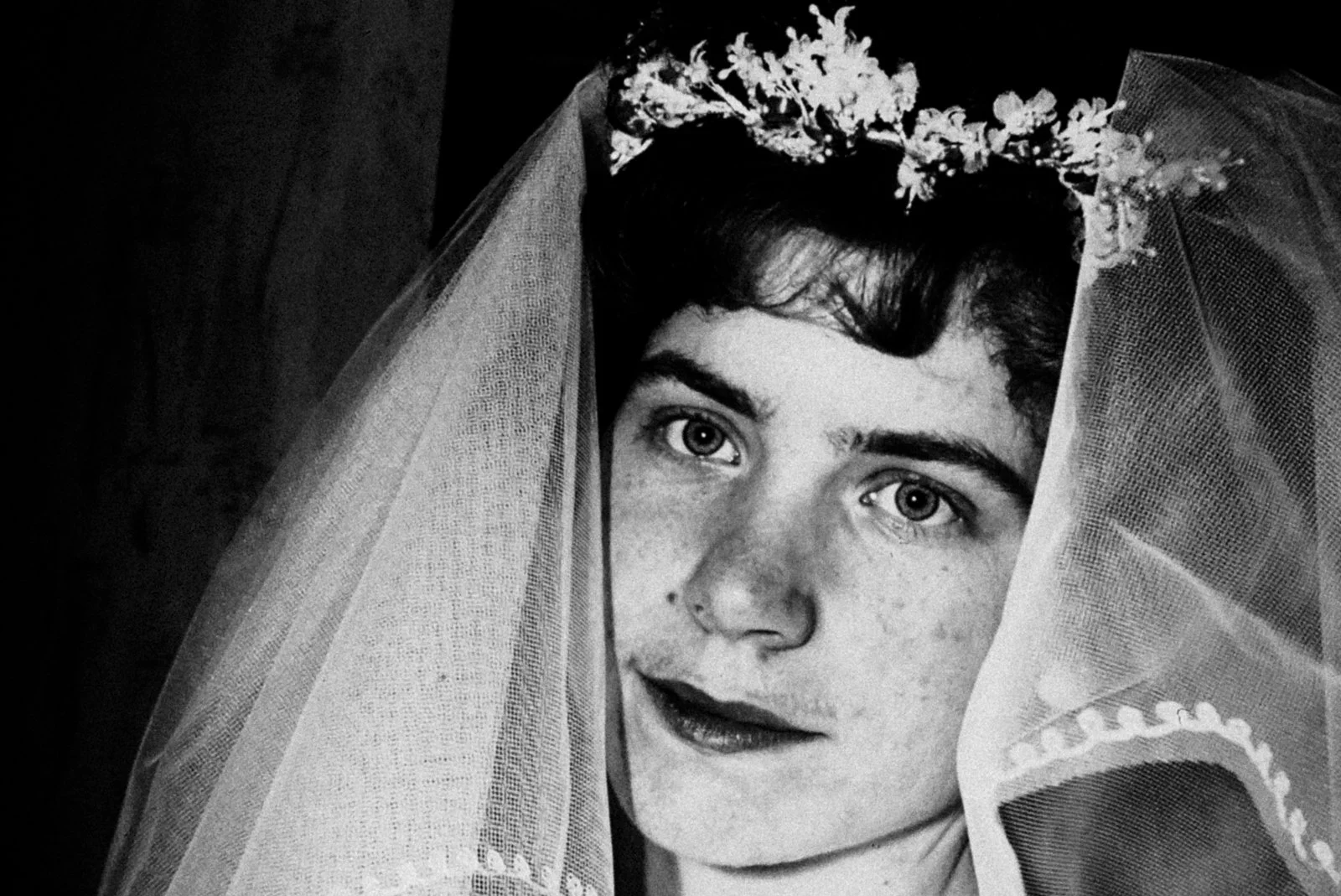
Todtnauberg: Inherited Fault Lines
You might think Todtnauberg is just a photo series. An aesthetic proposition among others. That would be a mistake. Todtnauberg grows out of a deep unease: what History has left behind in our landscapes, our families, our habits of seeing.

come from there. Or not far from it. So: not innocent.
The forest Heidegger looked at — I breathed it.
Not by choice. By origin.
You might think Todtnauberg is just a photo series. An aesthetic proposition among others. That would be a mistake. Todtnauberg grows out of a deep unease: what History has left behind in our landscapes, our families, our habits of seeing. That heavy residue, often unspoken, which Europe prefers to bypass rather than confront — even though it always returns, under new names, new masks.
I was born a few kilometres from Todtnauberg. This place is no abstraction; it is my ground, the first horizon of my gaze. Returning there is not a walk. It is returning to an intimate territory where History has never stopped working on memory — mine, and that of so many others. A home — but a fractured one.

Everything begins with that cabin in the Black Forest. After the Shoah, Heidegger welcomes Paul Celan there. A philosopher who dodges confession. A surviving poet waiting for a word that will never come. A tiny yet decisive scene: one of the greatest thinkers of the twentieth century refuses to acknowledge his complicity. That is the original crack. The denial around which Europe continues to circle.
From that fracture, Todtnauberg unfolds. An open-air investigation into a European memory that, beneath its calm surface, remains a mined territory. The photographed landscapes — Verdun, Amsterdam, the Black Forest — are not places. They are archives. Evidence. Crime scenes whose wounds nature has covered but never healed.
One reading guided me throughout this inquiry: Les Origines by Reiner Schürmann. A testament-book, written under the urgency of approaching death. Schürmann dismantles the illusion of “native soil,” of clear lineage, of origin as reassurance. He shows that origin is a wound, not a myth. A fracture, not a foundation. Reading him, I understood that my own origin — Todtnauberg — belongs to that order: not a root, but a shard.
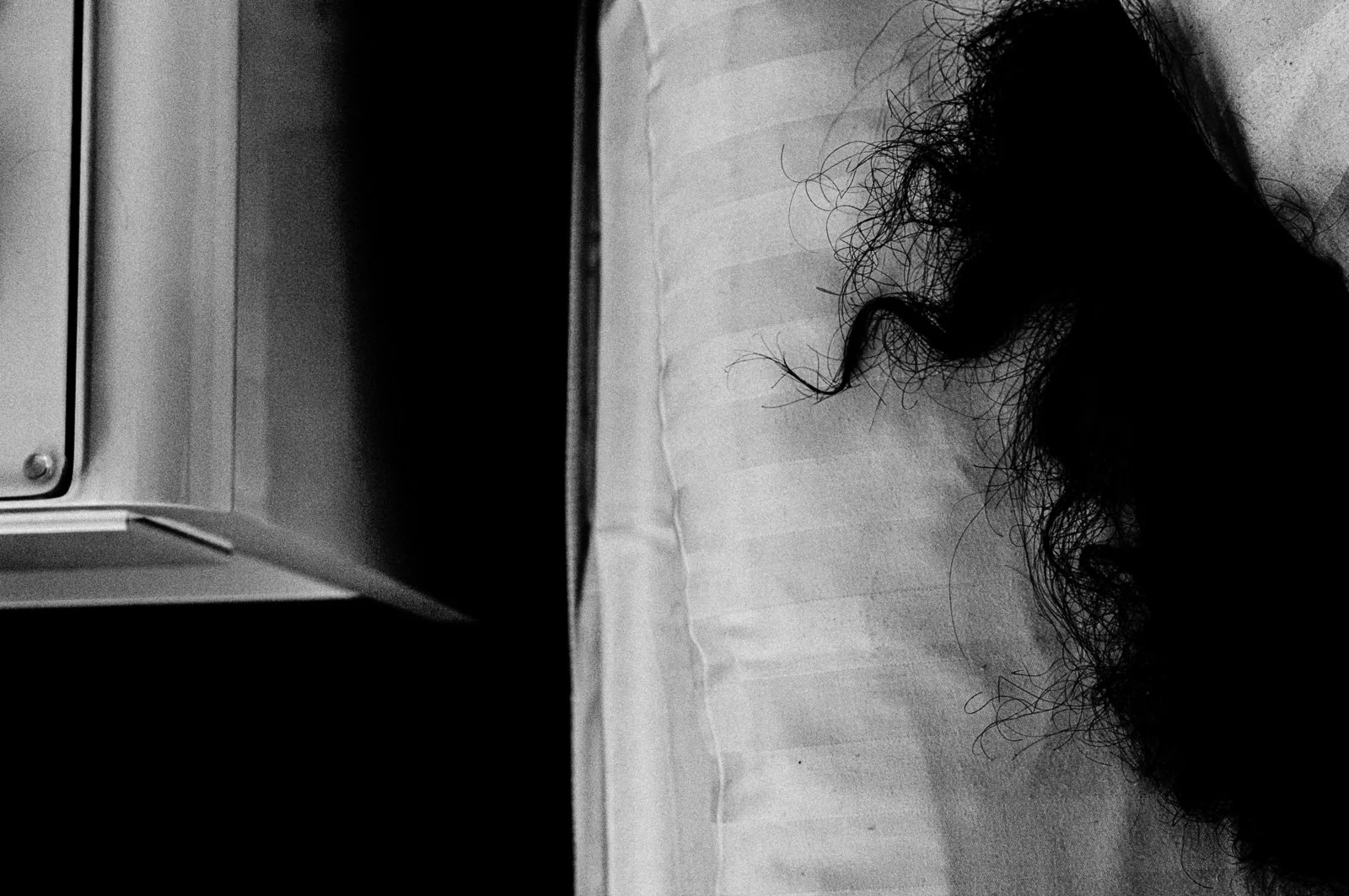
In the series, an almost abstract patch of ground photographed in Verdun speaks for itself: the industrialisation of death, millions of lives reduced to numbers and swallowed by mud. Later, in Amsterdam, after visiting Anne Frank’s house, a simple strand of my daughter’s hair on a white sheet summons the Shoah into the most ordinary gesture. Memory does not warn: it erupts.
And then there is this obstinate return: the portrait of my grandfather. Swept up by the currents of Nazism, like so many ordinary men whom History required in order to become possible. This figure reappears in Todtnauberg as a dark leitmotif, echoing Celan’s Todesfuge: “der Tod ist ein Meister aus Deutschland.”
Celan’s “Master from Germany” — that is him. My grandfather. Not a caricatured perpetrator, but an ordinary man. And it is precisely that ordinariness — yes — that makes one tremble.
Todtnauberg is this: refusing to look away. Accepting that history does not stop in books. That it colonises families, gestures, the folds of language. That it also shapes how we do — or do not — recognise the rise of today’s dangers.
Because what is returning now is clear: authoritarianism settling quietly, the re-entry of dehumanisation into public language, state violence justified in the name of security, militarisation presented as inevitability. A familiar sound. A cycle repeating.
The images of Todtnauberg offer no lesson. They open a space. A place where we may still ask: what, in this landscape, is coming back? And above all: what do we — each of us — do with our origins, our inheritances, this past that continues to look back at us?
It is the only question that matters. And it does not ask for comfort, but for courage: the courage to look at where our responsibility truly begins.